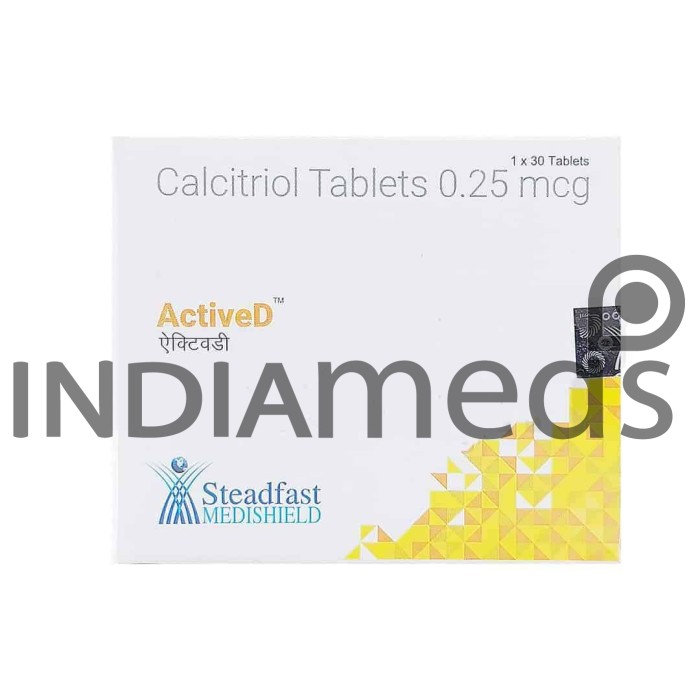
Active D Tablet 30's
Description:
Active D tablet contains an active component of Calcitriol. It is used to treat various conditions related to calcium and bone metabolism.
Uses:
- Hypocalcemia (low blood calcium)
- Hypoparathyroidism (low parathyroid hormone)
- Chronic Kidney Disease
- Osteoporosis (weakened bones)
- Rickets and Osteomalacia
- Psoriasis
Therapeutic Effects:
Active D tablet, the active form of vitamin D, exerts significant therapeutic effects on calcium and phosphate regulation, bone health, and kidney function. Enhancing calcium and phosphate absorption from the intestines, it maintains optimal mineral levels in the blood, which is crucial for bone strength, nerve transmission, and muscle function.
Interaction with other drugs:
Inform the doctor about your medicines, including prescription, over-the-counter, nutritional or vitamin supplements, and herbal products. Certain medications may interact with Active D tablet, reducing effectiveness by causing undesirable side effects.
Storage:
- Store at room temperature below 25°C
- Keep away from moisture, heat, and light.
- It should not be frozen.
- Keep away from children and pets.
How to consume:
Active D tablet can be swallowed as a whole with a full glass of water. The dose depends on the medical condition and treatment goals. The dose depends on the condition's age, weight, and severity and is decided by a healthcare provider.
Safety Advices:
- Pregnancy: consult a doctor before using Active D tablet during pregnancy.
- Breastfeeding: breastfeeding mothers should consult their healthcare provider before using Active D tablet.
- Lungs: consult your healthcare provider if you have a history of lung conditions before using Active D tablet.
- Liver: patients with liver dysfunction should consult a healthcare provider before taking Active D tablet.
- Alcohol: excessive alcohol consumption can affect bone health, so it is unsafe to take Active D tablet with alcohol.
- Driving: if you experience any adverse effects that could affect your driving comfort, it is advisable to consult a healthcare provider.
Side Effects:
Active D tablet causes some side effects like all medications, although not everyone will experience them.
Serious:
- Hypercalcemia (elevated blood calcium levels)
- Allergic reactions (rash, itching, swelling, difficulty breathing)
- Kidney stone formation
- Irregular heartbeat
- Bone pain
Common:
- Increased thirst and urination
- Loss of appetite
- Nausea and vomiting
- Constipation
- Muscle weakness
- Headache
- Dry mouth
Word of Advice:
Consult a healthcare professional before starting Active D tablet, especially if you are pregnant or breastfeeding. Take the amount your doctor recommends and follow the directions. Be careful if you are taking blood thinners, blood pressure medications, or cholesterol drugs. Serious reactions like allergies, tummy troubles, or low blood pressure are rare but possible. If allergic reactions happen, stop using it and see a doctor. Keep checking in with your doctor, especially if you might get a little upset stomach, headache, diarrhea, or trouble sleeping. They will help you decide if you still need to take it. Before starting this medication, tell your doctor about your health history and other supplements.
FAQs:
Can Active D tablet have side effects?
Excessive Active D tablet supplementation can lead to hypercalcemia (high blood calcium levels), resulting in symptoms like kidney stones, gastrointestinal issues, and calcium deposits in soft tissues. Proper dosing and medical supervision are crucial.
How does Active D tablet interact with parathyroid hormone (PTH)?
Active D tablet and PTH work together to regulate calcium homeostasis. When blood calcium is low, PTH stimulates the production of Active D tablet, which then helps increase calcium absorption from the intestines and prevents excessive calcium loss in the urine.
Is Active D tablet used in kidney disease?
Yes, Active D tablet is used in managing kidney disease, particularly renal osteodystrophy, which can occur due to kidney dysfunction. It helps maintain bone health and mineral balance in patients with impaired kidney function.
Can I take Active D tablet supplements without a prescription?
It's important to consult a healthcare professional before taking any supplements, including Active D tablet. Self-supplementation without medical guidance can lead to imbalances and adverse effects.
Are there natural sources of Active D tablet?
While Active D tablet is synthesized in the body, its precursor, vitamin D3, is obtained from dietary sources like fatty fish, egg yolks, and fortified dairy products. Sunlight exposure also triggers the production of vitamin D in the skin.
Fact Box:
- Molecule name: Calcitriol
- Therapeutic class: Vitamin D Analog
- Pharmacological class: Vitamin D Metabolite
- Indications:
- Energy support
- Hypocalcemia (Low blood calcium)
- Hypoparathyroidism (Low parathyroid hormone)
- Chronic Kidney Disease
- Osteoporosis (weakened bones)
- Rickets and Osteomalacia
- Psoriasis
Tags:
health, tablets, active_d, medicine, vitamin_d, 30_s





-200x200.png "Dapnat 10mg Tablet 10's")

-200x200.png "Kerendia 10mg Tablet 14's")