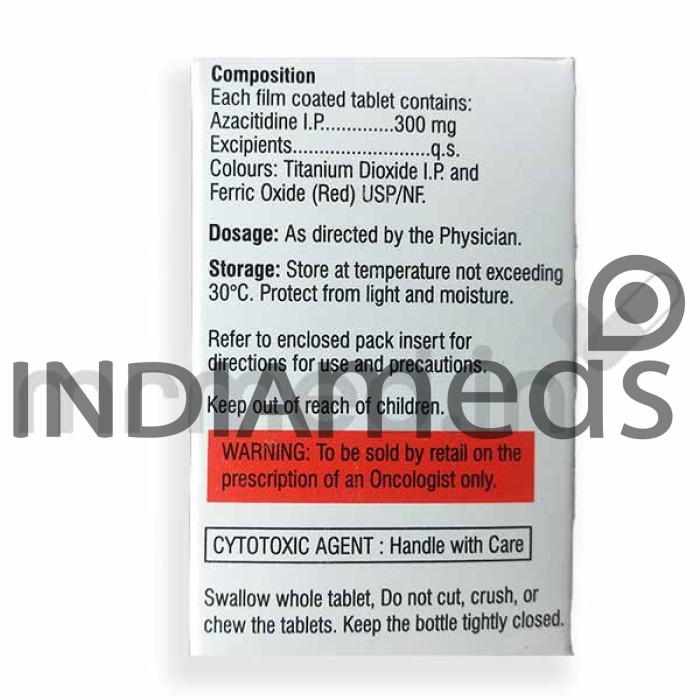
Acute Myeloid Leukemia with 20-30% blasts in patients who are not eligible for Haemopoietic stem cell transplant.
High-risk Myelodysplastic syndrome (MDS).
Therapeutic effects:
Xpreza 300 mg tablet binds to RNA and DNA, interrupts their activity in actively multiplying cells, and exhibits a toxic effect on cancer cells.
Interaction with other drugs:
Inform your doctor about any prescribed medications, over-the-counter medicines, nutritional and vitamin supplements, and herbal products you take or have taken before the treatment. Certain medications may interact with Xpreza 300 mg tablet and cause undesirable side effects.
Storage:
Store at 25°C.
Keep out of reach of children.
How to consume:
Take Xpreza 300 mg only under the supervision of your physician.
Your physician will decide the dose based on your height, weight and general condition.
The tablet is orally administered. Take it as a whole with water. Do not break, chew or crush the tablet.
Safety advices:
Pregnancy: Xpreza 300 mg tablets are not intended for use during pregnancy. Talk to your physician if you are pregnant or think you could be pregnant.
Breast feeding: Consult your physician for advice on taking Xpreza 300 mg tablets if you are a breastfeeding mother.
Lungs: Inform your physician before taking Xpreza 300 mg tablets if you have any lung problems.
Liver: Inform your physician before you take Xpreza 300 mg tablets if you are diagnosed with a tumor in the liver cells.
Alcohol: It is not known whether it is safe to consume alcohol with Xpreza 300 mg tablets. Please consult your doctor.
Driving: It is unsafe to drive after taking this injection as it causes dizziness and patients lack concentration and alertness. So, avoid driving and handling heavy machinery after taking Xpreza 300 mg tablets.
Common: Disturbances in the blood count (RBC, WBC, Platelets), nausea, vomiting, diarrhea, constipation, tiredness, skin reactions like redness and pain at the site of the tablet, decreased appetite, dizziness, pain in extremities, joint pain, stomach pain, headache, sore nose and throat, rashes and bruising.
Word of advice:
Inform the doctor if the patient has any allergy reactions, respiratory problems, kidney, liver, or heart problems, and medication taken for different medical conditions before taking this tablet as they worsen the condition.
Avoid using this tablet if the patient is planning for pregnancy or during pregnancy and in breastfeeding mothers as this medicine causes harmful effects on the developing baby.
FAQs:
How to use Xpreza 300 mg tablet?
Take Xpreza 300 mg tablet only under the supervision of the physician. Doctors will decide the dose based on the patient's height, weight, and general condition. Xpreza 300 mg tablet is orally administered. Take the tablets as a whole with water. Do not chew, break or crush the tablets.
Does Xpreza 300 mg tablet cause hair loss?
No, Xpreza 300 mg tablet does not cause hair loss even after using it for a prolonged period of time.
How does Xpreza 300 mg tablet work?
Xpreza 300 mg tablet binds to RNA and DNA, interrupts their activity in actively multiplying cells, and exhibits a toxic effect on cancer cells.
Is Xpreza 300 mg chemotherapy?
Yes. Xpreza 300 mg tablets is a chemotherapy used in the treatment of cancers. It interferes with the cell's DNA synthesis and decreases growth and multiplication (cytotoxic effect).
What are the side effects of Xpreza 300 mg tablets?
The common side effects of Xpreza 300 mg tablets are nausea, vomiting, diarrhea, constipation, tiredness, decreased appetite, rashes, redness of the skin, dizziness, joint pain, headache, sore throat, and nose.
Is it safe to drive after taking Xpreza 300 mg tablets?
It is unsafe to drive after taking this tablet as it causes dizziness and patients lack concentration and alertness. So, avoid driving and handling heavy machinery after taking this medication.
Fact Box:
Molecule name: Azacitidine
Therapeutic class: Anti-metabolites
Pharmacological class: Anti-Neoplastics
Indications:
Treat advanced or metastatic non-small lung cancer (NSCLC).