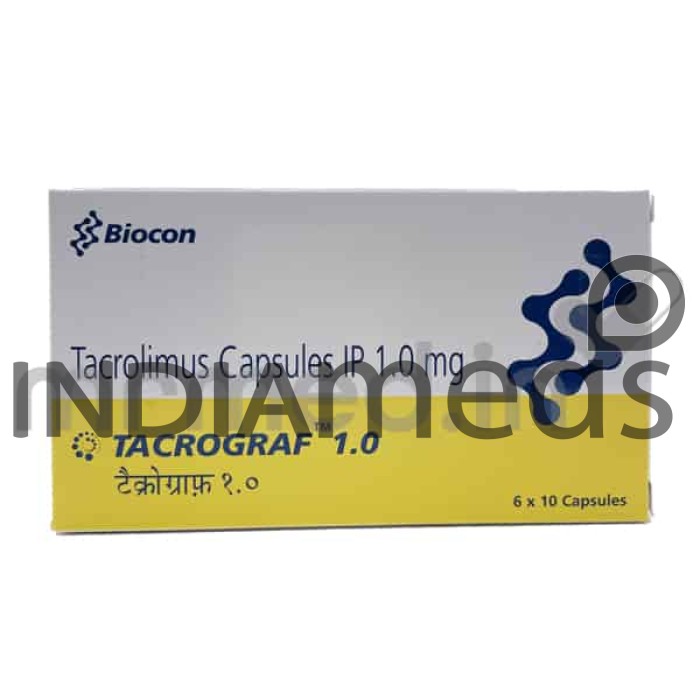
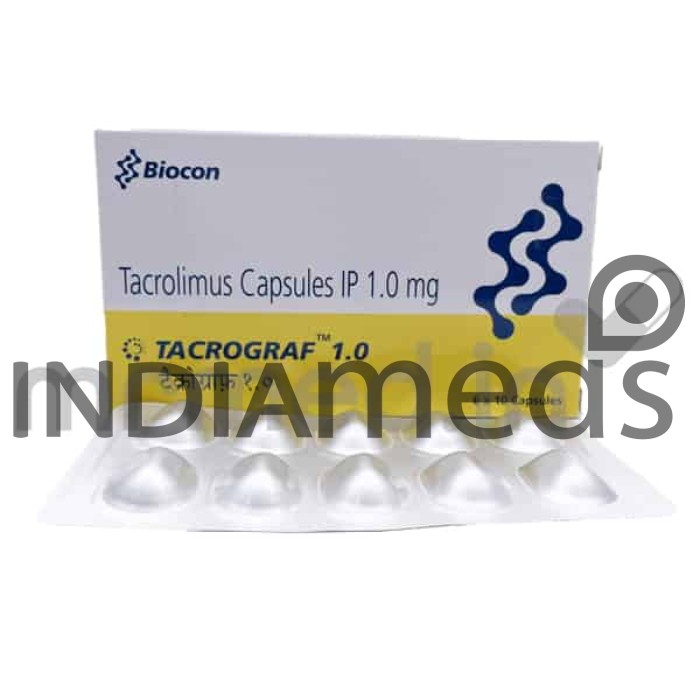
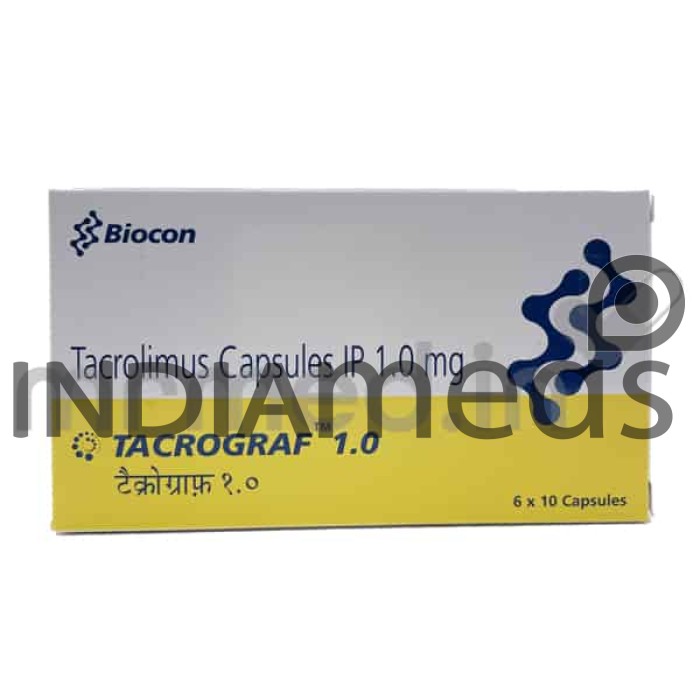
Tacrograf 1mg Capsule contains the active substance Tacrolimus.
It is an immunosuppressant that belongs to the class of medications called calcineurin inhibitors.
This capsule is used along with other medications to prevent organ transplant rejection in people receiving liver, kidney, heart, or other transplants.
It is also indicated to control the body’s immune response, enabling it to accept the transplanted organ.
Contraindications:
Do not take Tacrograf 1mg Capsule if you are allergic to Tacrolimus or any of the other ingredients of this medicine.
Report your physician if you are allergic to any antibiotic group.
Inform your doctor if you have or had liver or heart disease before initiating the treatment.
Warnings:
Notify your physician immediately if you develop fever, bruising under the skin (which may appear as red dots), unexplained tiredness, confusion, yellowing of the skin or eyes, reduced urine output, vision loss, and seizures after taking this medicine.
Limit exposure to sunlight and UV light while consuming Tacrograf 1mg Capsule by wearing appropriate protective clothing and sunscreen with a high sun protection factor.
This medicine may cause diarrhea; inform your physician if you have diarrhea for over a day.
Storage:
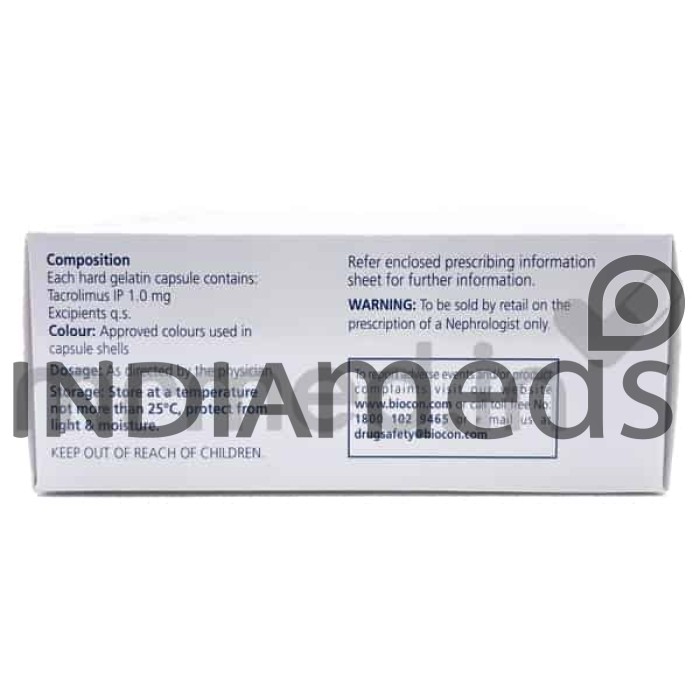
Store Tacrograf 1mg Capsule at 25°C.
Keep the capsule away from the reach of children and pets.
Dosage and Administration:
Your doctor will decide the dose and duration of the treatment based on your disease condition, severity, and other factors.
Always take Tacrograf 1mg Capsule as prescribed by your doctor.
Do not open, break, crush, or chew the capsules. Swallow the capsule whole with a glass of water.
Take these capsules on an empty stomach or at least 1 hour before or 2 to 3 hours after the meal.
Safety Advices:
Pregnancy: Based on animal studies, Tacrograf 1mg Capsule can cause harmful effects on the baby. Inform your physician if you are pregnant, suspecting pregnancy, or planning to get pregnant before initiating the treatment.
Breastfeeding: Do not consume Tacrograf 1mg Capsule if you are breastfeeding because this medicine is excreted into breast milk and may cause harmful effects on the body.
Lungs: It is unknown whether Tacrograf 1mg Capsule can be used in patients with lung disorders. Consult your doctor if you have any lung diseases before starting the treatment.
Liver: Tacrograf 1mg Capsule should be cautiously administered in patients with severe liver diseases. Dose adjustments are necessary for severe liver failure.
Alcohol: It is unsafe to consume alcohol when taking Tacrograf 1mg Capsule because it may cause excessive drowsiness or liver problems.
Driving: Driving vehicles or operating machinery while taking Tacrograf 1mg Capsule is unsafe because it may cause drowsiness and vision problems.
Side Effects:
Common: Swelling in the arm or leg, hair loss, itchy skin, constipation, diarrhea, nausea, vomiting, anemia, headache, cough.
Serious: Increased or decreased heartbeats, GI bleeding, liver injury, seizure, acute kidney failure, lung infection or respiratory problems.
FAQ:
What if I missed a dose of Tacrograf 1mg Capsule?
Try to take it as soon as possible, you remember. If it is time for the next dose, skip the missed dose and follow the regular schedule. Do not double the dose to make up for the forgotten dose.
What should you not use with Tacrograf 1mg Capsule?
Avoid taking mycophenolic acid-containing products, nelfinavir, sirolimus, cyclosporine, antibiotics, and antiviral medications. Inform your healthcare provider about any prescription medicines, over-the-counter medications, or vitamin or herbal supplements you have taken before the treatment.
How long do I need to take Tacrograf 1mg Capsule after a transplant?
The duration of Tacrograf 1mg Capsule treatment after a transplant can vary depending on various factors, including the type of organ transplant and the individual's response to the medication. In most cases, Tacrograf 1mg Capsule is taken long-term to prevent organ rejection, but the healthcare professional will determine the specific duration.
Can Tacrograf 1mg Capsule increase the risk of infections?
Yes, Tacrograf 1mg Capsule can suppress the immune system, which may increase the risk of infections. It is important to take precautions to minimize the risk of infections, such as practicing good hygiene, avoiding close contact with individuals who are sick, and getting recommended vaccinations.
Can Tacrograf 1mg Capsule affect kidney function?
Tacrograf 1mg Capsule must be cautiously administered in patients with kidney diseases because it can potentially affect kidney function. Regular monitoring of kidney function through blood tests is typically done to detect any changes or potential complications.
Should I follow any dietary restrictions while taking Tacrograf 1mg Capsule?
Tacrograf 1mg Capsule can interact with certain foods and beverages, particularly grapefruit and grapefruit juice, which may increase the levels of this medicine in the blood. Discussing dietary restrictions and potential interactions with your healthcare provider is important.








-200x200.jpg "Glenza 160mg Tablet")