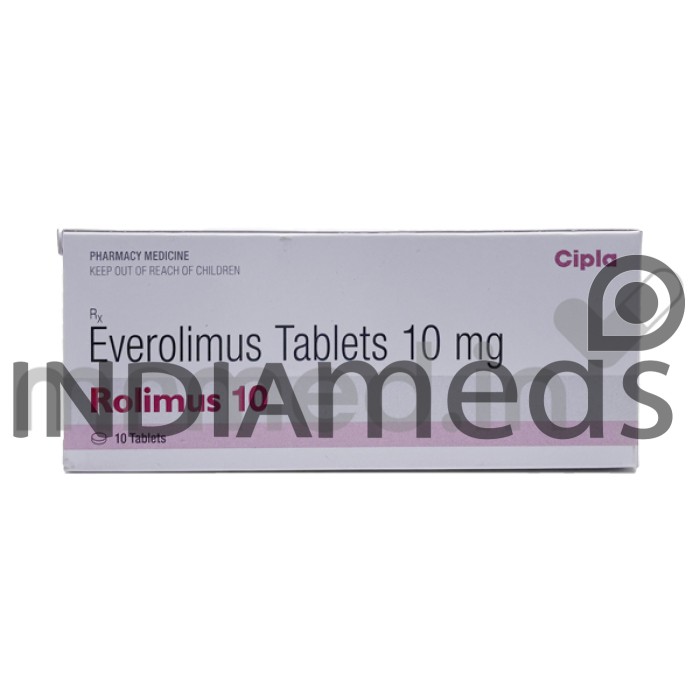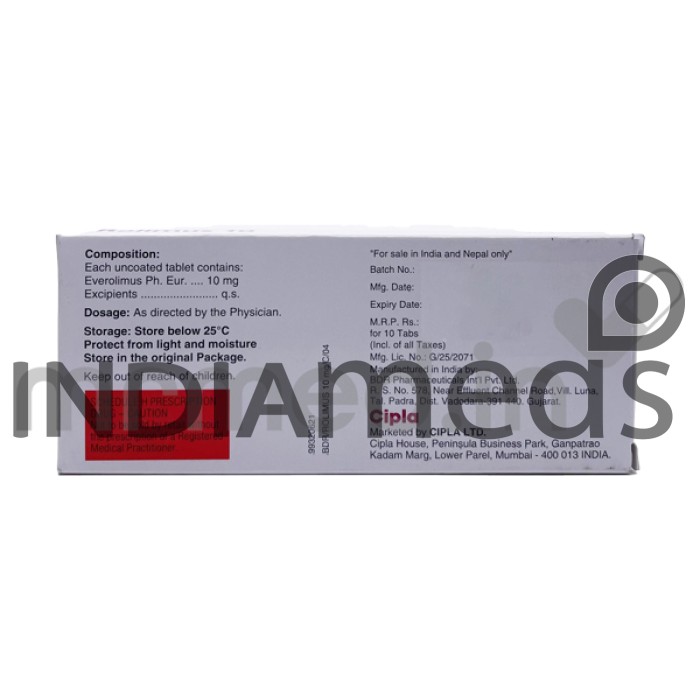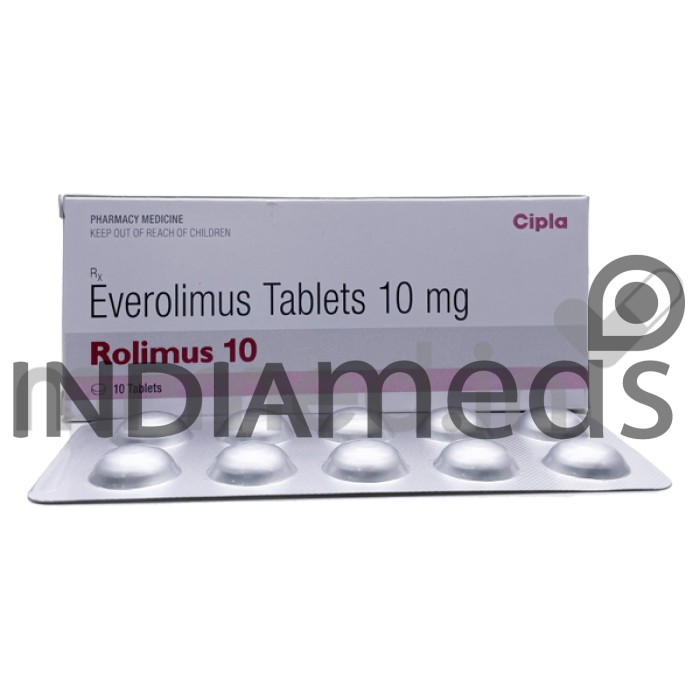
Uses:
- Advanced breast cancer
- Advanced renal cell carcinoma
- Advanced pancreatic neuroendocrine tumours
- Treatment of subependymal giant cell astrocytoma
Therapeutic Effects:
- Inhibits the activity of mammalian target of rapamycin (mTOR), which regulates cell growth.
- Slows the growth of abnormal cancer cells by blocking the mTOR protein.
- Helps to reduce the size of tumours and improve outcomes in patients.
Interaction with Other Drugs:
- Inform your healthcare provider about all the medicines you take, including prescription medications, over-the-counter medications, nutritional or vitamin supplements, and herbal products.
- Certain medications may interact with Rolimus 10mg tablet and reduce effectiveness by causing undesirable side effects.
Safety Advices:
- Pregnancy: not recommended; consult your doctor if you are pregnant or planning for pregnancy during the treatment.
- Breast Feeding: unsafe to consume; the drug passes into breast milk and harms the baby.
- Lungs: consult your doctor if you have any lung diseases before starting the treatment.
- Liver: inform your doctor if you have any liver problems before taking Rolimus 10mg tablet. Regular monitoring of liver function tests is recommended.
- Alcohol: consuming alcohol may affect the effectiveness of Rolimus 10mg tablet. Stop consuming alcohol if you are taking this medicine.
- Driving: it is unsafe to drive vehicles or operate heavy machinery after taking Rolimus 10mg tablet, it may cause dizziness and impair your concentration.
Side Effects:
- Serious: difficulty breathing or swallowing, swelling of face, lips, tongue, throat, severe itching, red rash, raised bumps.
- Common: infection (chills, increased temperature), coughing, wheezing, excessive thirst, high urine output or severely decreased urine output, tiredness, bleeding, increased appetite with weight loss.
Word of Advice:
- Inform your healthcare provider before starting this treatment if you are pregnant or planning for pregnancy.
- Discuss effective birth control methods with your healthcare provider and use them during the treatment for 8 weeks after your last dose.
- The occurrence of mouth ulcers or sores is common during this treatment, so your healthcare provider will prescribe a mouthwash. Use the mouthwash as recommended to prevent and manage the symptoms.
FAQs:
What you should know before taking Rolimus 10mg tablet? Before taking Rolimus 10mg tablet, it is important to know that your risk of getting bacterial or viral infection increases with this treatment. If you have been infected with Hepatitis B, this drug increases the chances of reinfection. Tell your healthcare provider if you experience fever, chills, cough, yellowing of the skin, joint pain, or swelling during this treatment.
Is it safe to use Rolimus 10mg tablet during pregnancy? Rolimus 10mg tablet has the tendency to cause harm to the unborn fetus. Inform your healthcare provider before starting this treatment if you are pregnant or planning for pregnancy. Your healthcare provider will conduct a pregnancy test before you start treatment with this drug.
What are the side effects of Rolimus 10mg Tablet? The common side effects that are likely to occur while you are on the treatment with Rolimus 10mg tablet are fever, chills, skin rash, joint pain, swelling, tiredness, loss of appetite, high risk of infection, mouth ulcers, and difficulty breathing.
Is it safe to undergo surgery while on treatment with Rolimus 10mg tablet? Rolimus 10mg tablet may lead to poor wound healing ability. Consult your healthcare provider and stop taking this tablet at least one week before planned surgery.
Can I drink alcohol while taking Rolimus 10mg tablet? It is generally recommended to avoid drinking alcohol while taking Rolimus 10mg tablet, as alcohol can increase the risk of liver damage.
Fact Box:
- Molecule name: Everolimus
- Therapeutic class: Antineoplastics
- Pharmacological class: mTOR kinase inhibitors
- Indications:
- Advanced breast cancer
- Advanced renal cell carcinoma
- Advanced pancreatic neuroendocrine tumours
- Treatment of subependymal giant cell astrocytoma