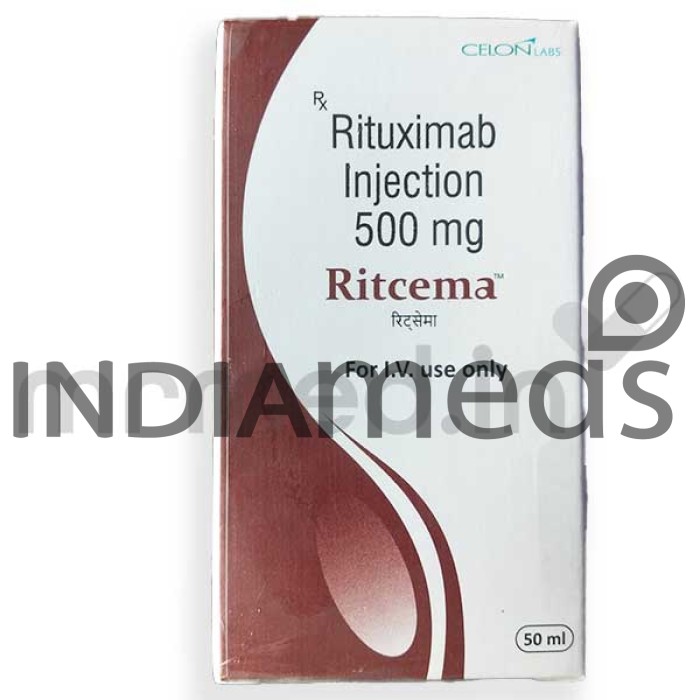
Belongs to the class of medications called anti-CD20 monoclonal antibodies.
Uses
Non-Hodgkin’s lymphoma (NHL).
Chronic lymphocytic leukemia (CLL).
Rheumatoid arthritis (in combination with methotrexate).
Granulomatosis with polyangiitis or microscopic polyangiitis.
Pemphigus vulgaris.
Important Information
Do not take if you are allergic to rituximab or any other ingredients of this medicine.
Do not take if you have a weak immune system or any severe active infection.
Inform your physician if you have heart disease, heart failure, or breathing problems before initiating the treatment.
Talk with your doctor if you have ever had a hepatitis B infection.
Pregnancy and breastfeeding are not recommended when you are taking this injection.
Side Effects
Common side effects include infection of the blood, reduced red blood cells, dizziness, swelling in the face and body, itchy skin, diarrhea, increased sweating, and low or high blood pressure.
Serious side effects include increased or decreased blood pressure, chest pain, hypersensitivity reactions, hepatitis B viral infection, memory loss, trouble thinking, difficulty in walking.
Interaction with Other Drugs
Inform your healthcare provider about all the medicines you take, including prescription medications, over-the-counter medications, nutritional and vitamin supplements, and herbal products.
Storage
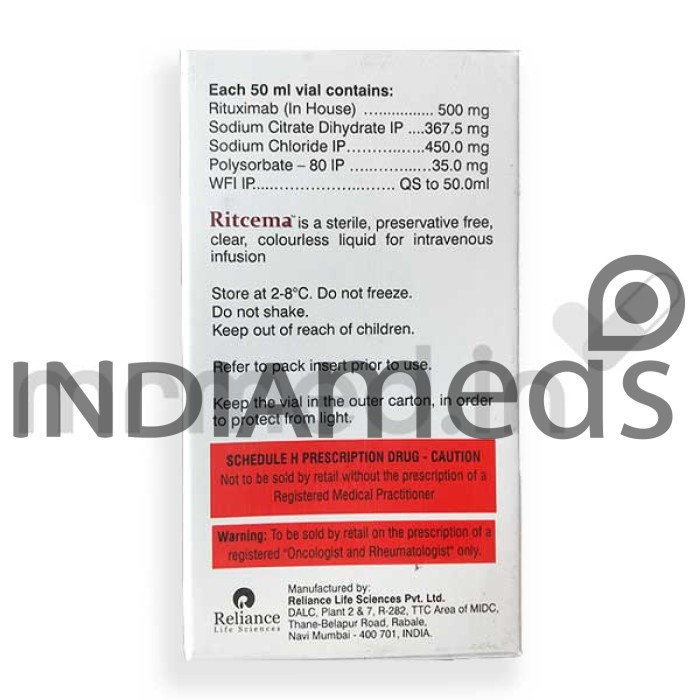
Store Ritcema 500mg injection in the refrigerator (2°C to 8°C).
Do not freeze.
Keep the injection away from the reach of children and pets.
Administration
It should only be administered by a trained doctor or nurse.
Do not self-administer the injection.
Before giving Ritcema 500mg injection, you will be given other medications (pre-medication) to reduce the possible side effects.
Your doctor will decide the dose and duration of your treatment based on the disease severity and other factors.
It will be given as an intravenous infusion, and you will be monitored carefully for any unwanted side effects.
Safety Advice
Pregnancy: Ritcema 500mg injection is unsafe to administer in pregnant women because it may affect the fetus.
Breastfeeding: Breastfeeding is not recommended in patients taking Ritcema 500mg injection.
Lungs: Consult your doctor if you have any lung diseases before starting the treatment.
Liver: Consult your doctor if you have or ever had liver disease or hepatitis B infection before starting the treatment.
Alcohol: Stop consuming alcohol if you are taking this medicine.
Driving: Caution is required while driving and operating machinery when you take Ritcema 500mg injection.
FAQs
Q1. What are the special precautions I should be aware of before starting treatment with Ritcema 500mg injection?
Inform your doctor about your pre-existing conditions (heart, kidney, liver, hepatitis B, or lung disease) and vaccination history.
Q2. What are Ritcema 500mg infusion-related reactions?
Infusion reactions occur during or within 24 hours after administering Ritcema 500mg injection. The symptoms are fever, chills, cough, itchy skin, nausea, vomiting, flushing, increased heart rate, and discomfort in the throat.
Q3. What will be the most important thing to monitor during Ritcema 500mg injection?
Your healthcare professional will monitor you carefully for unwanted side effects during the Ritcema 500mg injection. You will be monitored for heart failure, increased blood pressure, or breathing failure.
Q4. Is weight gain a side effect of Ritcema 500mg injection?
Weight gain has been reported in patients treated with Ritcema 500mg injection for non-Hodgkin’s lymphoma.
Q5. Does Ritcema 500mg injection suppress the immune system?
Yes, it can suppress the immune system, and the chances of catching an infection are high.