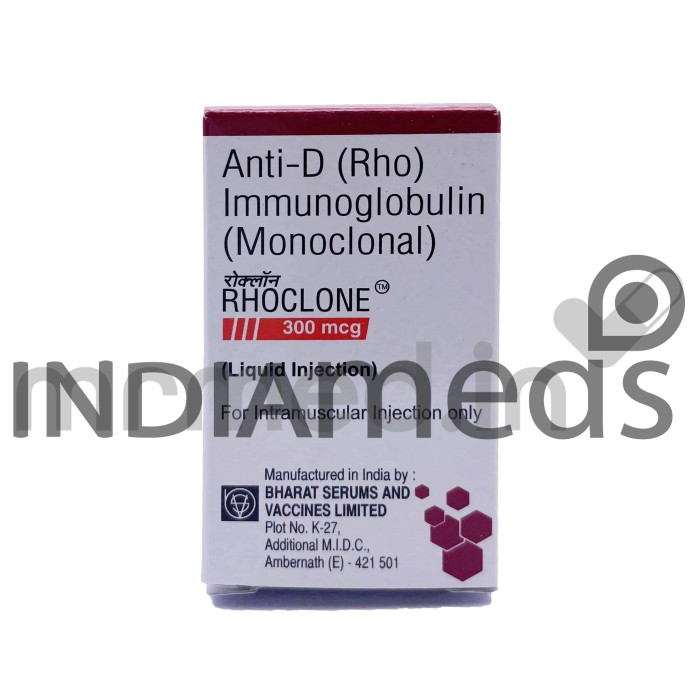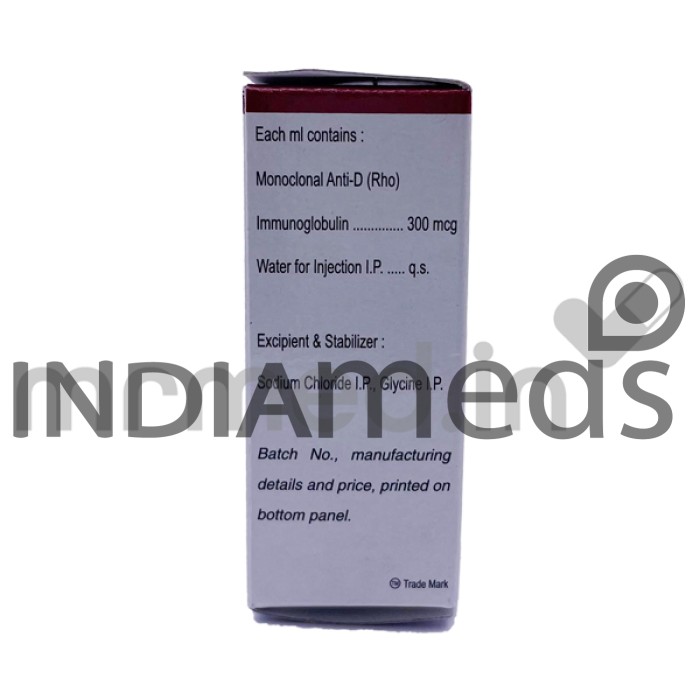
Uses:
- Prevention of Rh sensitization.
- Prevention of Rh hemolytic disease of the newborn (HDN).
- Preventing alloimmunization.
Mechanism of action:
- Rhoclone 300mcg injection contains active components called Anti-Rh(D) immunoglobulin.
- It binds to Rh-positive fetal blood cells that enter the maternal bloodstream during pregnancy or childbirth.
- By covering the Rh(D) antigens on these fetal blood cells, RhIg prevents the mother's immune system from recognizing them as foreign and producing antibodies against them.
Important information:
- Individuals with a known severe allergy or hypersensitivity to any component of anti-Rh(D) immunoglobulin should not receive the medication.
- It should not be given to Rh-positive mothers as they already have Rh(D) antigens on their red blood cells and cannot develop Rh antibodies.
- If a woman is already sensitized to Rh(D) antigens, administering this medication will not reverse the sensitization.
- Rhoclone 300mcg injection is generally considered safe for use in elderly individuals, provided they meet the necessary criteria for administration based on their blood type and medical history.
- It can be administered to children when it is medically necessary to prevent Rh sensitization.
Administration:
- Rhoclone 300mcg injection can be administered through two primary routes: intramuscular (IM) injection and intravenous (IV) injection.
- The doctor chooses the administration route based on the patient's needs and preferences.
Safety advice:
- Always consult a healthcare provider before taking this medication.
- Rhoclone 300mcg injection is not contraindicated during breastfeeding.
- Individuals with respiratory or liver conditions should consult a healthcare provider before taking Rhoclone 300mcg injection.
- There is generally no specific interaction between Rhoclone 300mcg injection and alcohol, but it's essential to consult your healthcare provider's recommendations and avoid excessive alcohol consumption.
- Rhoclone 300mcg injection can cause side effects, such as fatigue and dizziness, which can affect your ability to drive.
Side effects:
- Serious: allergic reactions, blood clots (thromboembolism), kidney issues, infections.
- Common: local reactions, low-grade fever.
FAQs:
Can Rhoclone 300mcg injection be administered after a stillbirth or pregnancy termination? Yes, Rhoclone 300mcg injection can be administered after a stillbirth or pregnancy termination, as these events may result in the mixing of maternal and fetal blood, posing a risk of Rh sensitization.
What are the common side effects of Rhoclone 300mcg injection? Common side effects of Rhoclone 300mcg injection may include mild local reactions at the injection site, such as pain, redness, or swelling. Some individuals may experience a low-grade fever.
What is the recommended dosage of Rhoclone 300mcg injection? The dosage of RhIg varies depending on the specific situation and the patient's weight. Healthcare providers follow established guidelines to determine the correct dosage.
Can Rhoclone 300mcg injection interfere with blood tests or affect typing results? Rhoclone 300mcg injection administration can temporarily affect blood test results related to Rh typing. Healthcare providers should consider this when interpreting test results and may need to perform additional testing if necessary.
Is Rhoclone 300mcg injection the same as a vaccine? No, Rhoclone 300mcg injection is not a vaccine. It is a medication that contains antibodies against the Rh(D) antigen and is used to prevent the development of Rh antibodies in Rh-negative individuals exposed to Rh-positive blood.
Are there any dietary restrictions or lifestyle changes necessary when receiving Rhoclone 300mcg injection? There are typically no specific dietary restrictions or lifestyle changes required when receiving Rhoclone 300mcg injection. Patients should continue their regular routines unless advised otherwise by their healthcare provider.
Fact box:
- Molecule name: Anti-Rh(D) immunoglobulin.
- Therapeutic class: Immunomodulator.
- Pharmacological class: Immunoglobulin G (IgG).
- Indications: Immune Globulins.