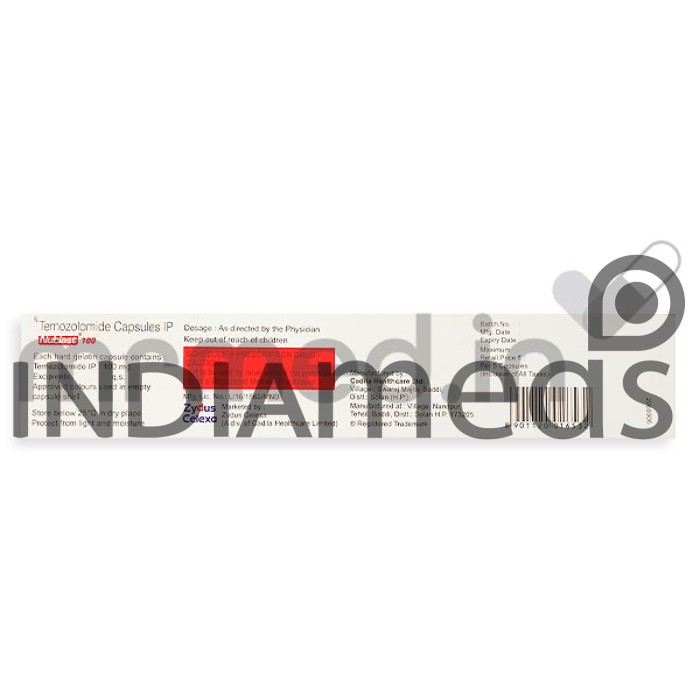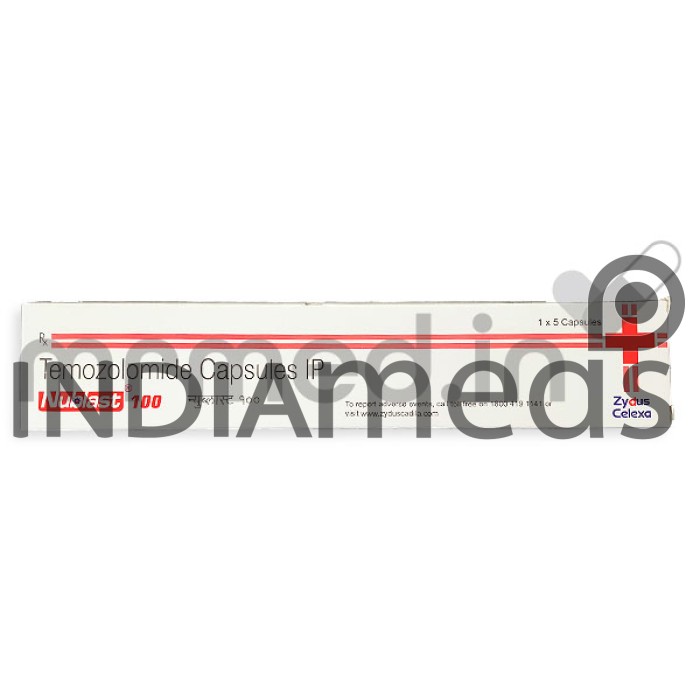
Nublast 100mg Capsule
Active ingredient: Temozolomide
Class of medication: Antitumor agents
Uses:
- Treatment of newly diagnosed glioblastoma multiforme.
- Treatment of refractory anaplastic astrocytoma.
Mechanism of action: Nublast 100mg Capsule inhibits the production of genetic material (DNA and RNA) of cancer cells, preventing their growth and multiplication, thereby preventing cancer spread to other parts of the body.
Important information:
- Keep Nublast 100mg Capsule out of sight and reach of children.
- Store protected from light and moisture.
- Do not store above 25°C.
- Use as directed by your physician. Your physician will prescribe an adequate dose according to your height and weight.
- Swallow the capsule whole with a glass of water, on an empty stomach. Do not open, crush or chew the capsule and avoid contact of the open capsules with your skin.
Safety advice:
- Pregnancy: Nublast 100mg Capsule is unsafe to use during pregnancy as it may cause fetal harm. It should not be used unless prescribed by your physician. Women with childbearing potential should use effective contraceptive precautions for at least 6 months following the completion of treatment.
- Breastfeeding: Nublast 100mg Capsule is unsafe to use during breastfeeding as it passes through breast milk and can harm the baby. Consult your physician for advice before breastfeeding.
- Lungs: Inform your physician before taking Nublast 100mg Capsule if you have any lung conditions.
- Liver: Inform your physician before taking Nublast 100mg Capsule if you have severe liver problems. Dose adjustment is required based on the condition.
- Alcohol: Avoid consuming alcohol while taking Nublast 100mg Capsule as it may cause unpleasant side effects. Consult your doctor for advice.
- Driving: Do not drive or operate heavy machines while being treated with Nublast 100mg Capsule as it may decrease alertness, affect your vision and make you dizzy and sleepy.
Side effects:
- Serious: Secondary cancer like myelodysplastic syndrome and myeloid leukemia, severe allergic reactions, inflammation and fluid buildup in lungs, blood clot in lungs or legs, liver toxicity, convulsions, fever and chills, severe headache, uncontrolled bleeding.
- Common: Hair loss, rashes, tiredness, nausea, vomiting and diarrhea, constipation, high blood sugar levels, dizziness, impaired sensation, tingling sensation, abnormal taste, vision and hearing problems, frequent urination, muscle damage, pain in muscles and joints, weight changes, infections and wounds, amnesia, abnormal blood cell counts, loss of appetite, sleep problems, memory loss, difficulty concentrating, changes in mental status and alertness, coordination problems.
FAQs:
- What class of medication is Nublast 100mg Capsule? Nublast 100mg Capsule belongs to the class of medications called Antitumor agents.
- Can children use Nublast 100mg Capsule? No, Nublast 100mg Capsule is not recommended for usage in children under 3. There is limited information on patients over the age of 3 who have taken this medication. Consult your doctor before taking Nublast 100mg Capsule.
- What is the best time to take Nublast 100mg Capsule? It is best to take Nublast 100mg Capsule once a day on an empty stomach. Take the capsule at the same time every day for better results.
- Can I take vaccinations while taking Nublast 100mg Capsule? No, the live vaccine may interact with Nublast 100mg Capsule. Hence, without consulting your healthcare provider, this medication should not be taken with any vaccinations.
- Can I drive while taking Nublast 100mg Capsule? No, taking Nublast 100mg Capsule while driving and operating heavy machines may cause dizziness, sleepiness, and decreased alertness, affecting your vision.
Word of advice: It is advised to use effective birth control for both men and women taking Nublast 100mg Capsule. Women of reproductive potential must use effective contraception during and after six months of therapy. Male patients receiving Nublast 100mg Capsule treatment should refrain from fathering children and should use reliable contraception during and for three months following the treatment. Your doctor could suggest routine blood tests to check your electrolyte levels, blood cell count, and liver function.