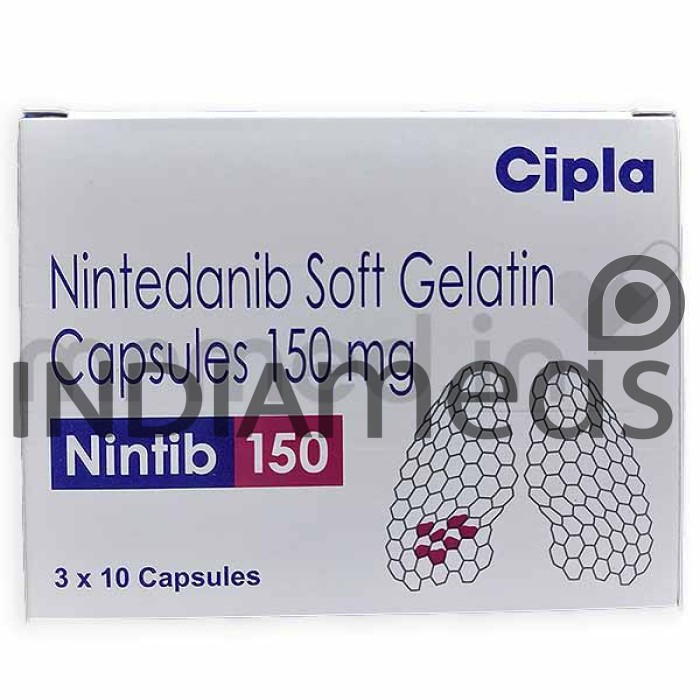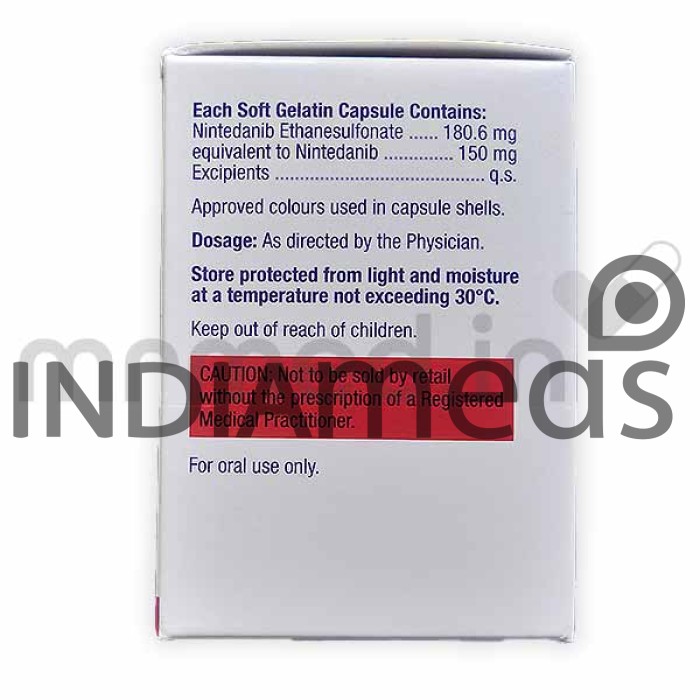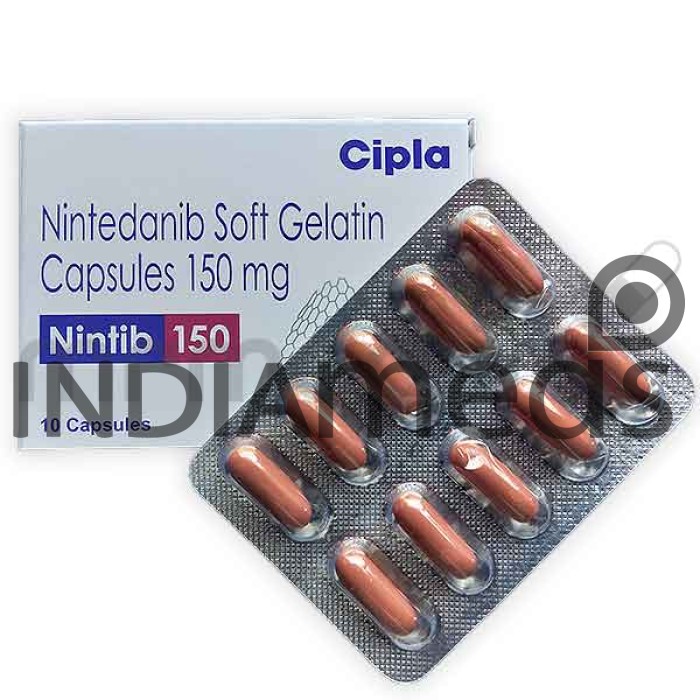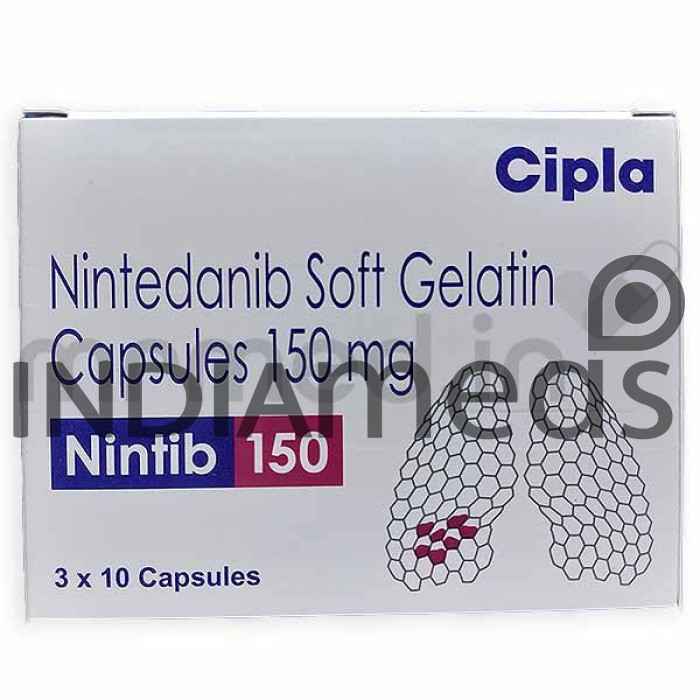
Nintib 150mg Capsule 10's
Active ingredient: Nintedanib
Therapeutic class: Antifibrotic drug
Pharmacological class: Tyrosine kinase inhibitors
Indications:
- Idiopathic pulmonary fibrosis
- Chronic fibrosing lung diseases with a progressive phenotype
- Systemic sclerosis-associated interstitial lung disease
Important information:
- Consult your physician if you are on blood thinning medications or have recently undergone surgery.
- Use effective contraception while receiving this capsule and continue to use it for three months, even after receiving the final dose.
- Inform your doctor if you have any medical conditions, such as liver and heart problems.
- Before starting the treatment, your doctor may conduct a liver function test at regular intervals during the first three months.
- Notify your doctor if you have a history of bleeding or blood clots (arterial thromboembolic).
Side effects:
- Serious: bronchitis, myocardial infarction, bleeding problems, pneumonia, major bleeding, yellow eyes, dark urine, pain in the upper right side of the stomach, severe stomach cramps, bloating, fever, and chills, chest pressure or pain on the left side of the body, increased protein in the urine (proteinuria).
- Common: nausea, vomiting, diarrhea, fever, skin ulcer, gastrointestinal perforation, altered liver function values, decreased appetite, headache, weight loss, hypertension.
How to consume:
- Take Nintib 150mg as advised by your physician.
- Swallow the medicine with a glass of water.
- Do not crush, chew, or open the medicine.
- Your doctor will decide the correct dose and duration for you based on your age, body weight, and disease condition.
- Do not stop taking this medicine unless your doctor advises you to stop.
Safety advices:
- Pregnancy: Nintib 150mg is unsafe to use during pregnancy as it may cause birth defects or death to the unborn baby.
- Breastfeeding: taking Nintib 150mg while breastfeeding may be unsafe because it may affect the child.
- Lungs: consult your doctor if you experience symptoms like pneumonia or any other lung-related condition while taking Nintib 150mg.
- Liver: inform your physician if you have liver problems because Nintib 150mg should be used cautiously with this condition.
- Alcohol: it is unknown whether consuming alcohol while taking a Nintib 150mg capsule is safe. Please speak with your physician.
- Driving: while taking Nintib 150mg, it is unsafe to drive or use machines because it may cause nausea, changes in vision, vomiting, etc.
FAQs:
How does Nintib 150mg work in the body? Nintib 150mg works by inhibiting several signaling pathways involved in the formation of scar tissue in the lungs.
Can Nintib 150mg cure idiopathic pulmonary fibrosis (IPF)? Nintib 150mg is not a cure for idiopathic pulmonary fibrosis (IPF). It is a medication that can help slow the progression of the disease by reducing the formation of scar tissue in the lungs.
How can I manage diarrhea while taking Nintib 150mg? If you experience diarrhea while taking Nintib 150mg, staying hydrated by drinking plenty of fluids is important. Your doctor may also recommend over-the-counter medications or prescription medications to help manage your diarrhea.
Can Nintib 150mg cause liver damage? Nintib 150mg may cause liver function abnormalities, which may indicate liver damage. It is important to have regular blood tests to monitor your liver function while taking this medicine.
What dosage of Nintib 150mg should I take? Your doctor will decide the correct dose and duration for you based on your age, body weight, and disease condition. Do not stop taking Nintib 150mg unless your doctor advises you to stop.
Why is liver enzyme getting elevated during treatment with Nintib 150mg? The reason for this elevation is not completely understood, but it is thought to be related to the drug's effects on certain enzymes involved in liver function. The elevation in liver enzymes is generally mild and temporary and typically resolves on its own or with dose adjustment of the Nintib 150mg capsule.