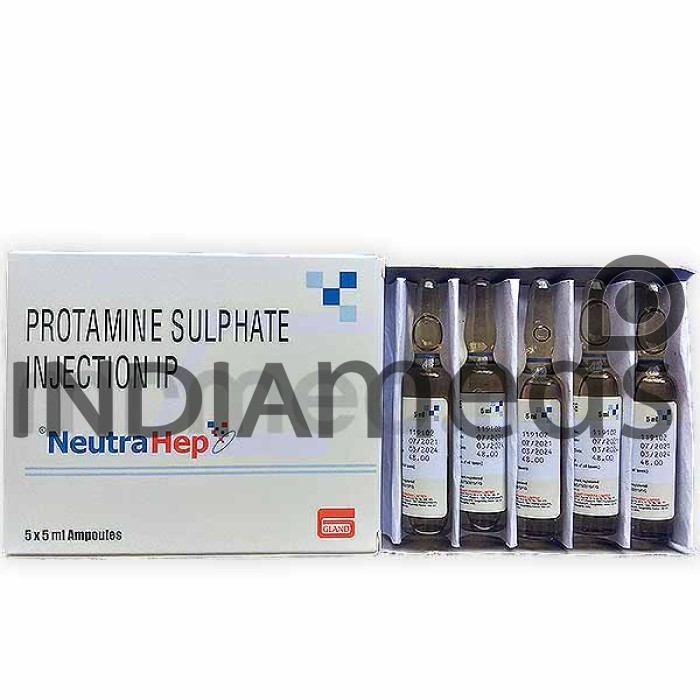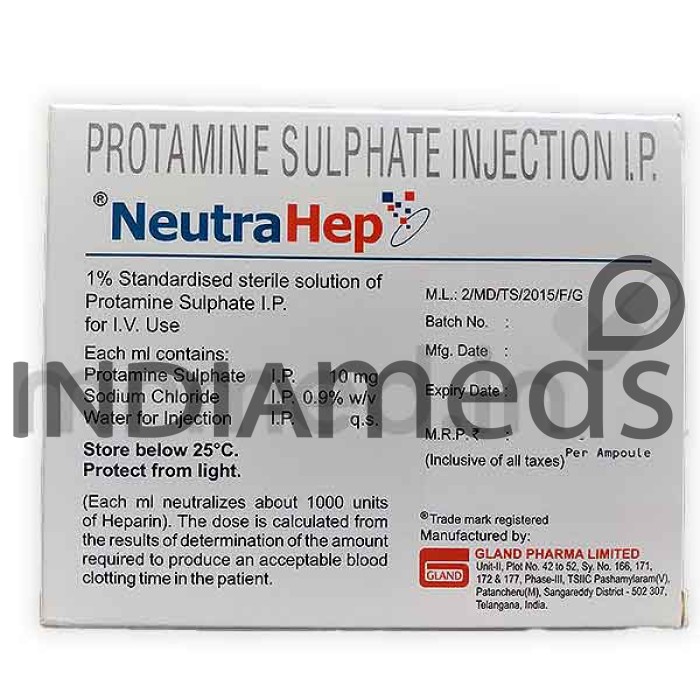
Neutrahep Injection contains the active ingredient Protamine Sulfate, which binds to and neutralizes the effects of heparin.
It forms a complex with heparin molecules, reducing their ability to prevent blood clotting.
This helps restore normal blood clotting function.
Important Safety Information:
Contraindications: Do not use if you have a known hypersensitivity or allergy to the drug or its components. Inform your physician if you are allergic to fish, have previously undergone heart surgery, are an insulin-dependent diabetic, or if you are a man who has had a vasectomy or is infertile.
Pregnancy and Breastfeeding: Inform your physician if you are pregnant, breastfeeding, suspect pregnancy, or planning to become pregnant.
Children: Not recommended for children aged twelve years and younger.
Monitoring: Patients undergoing prolonged medical procedures involving repeated doses of this drug should be subject to careful monitoring of clotting parameters.
Overdose: Do not try to treat the overdose on your own. Avoid taking any additional medications or interventions without medical guidance. The management of an overdose should be under the supervision of physicians.
Interaction with Other Drugs:
Inform your physician about all your medicines, including prescription, over-the-counter, nutritional or vitamin supplements, and herbal products. Certain medications may interact with Neutrahep Injection and reduce effectiveness by causing undesirable side effects.
Storage:
Store Neutrahep Injection below 25°C.
Protect from light and moisture.
Administration:
Neutrahep Injection should be administered by slow infusion into a vein for about ten minutes by your physician in a hospital setting.
Your physician will decide the correct dosage and duration based on age, body weight, and disease condition.
Side Effects:
Serious: Low or high blood pressure, shortness of breath.
Common: Flushing, feeling of warmth in the body, feeling sick, tiredness, injection site reactions (redness, pain, swelling).
Advice for Patients:
Patients receiving Neutrahep Injection should be closely monitored during and after administration to detect any signs of hypotension or adverse reactions.
Vital signs, including blood pressure and heart rate, should be regularly checked.
FAQs:
How does Neutrahep Injection work?
Neutrahep Injection works by binding to and neutralizing the effects of heparin. Heparin prevents blood from clotting, and protamine counteracts this by making blood clot more effectively.
Can Neutrahep Injection be used for other purposes besides reversing heparin's effects?
Neutrahep Injection is primarily used for reversing heparin's anticoagulant effects and is not used for other medical conditions or purposes.
How quickly does Neutrahep Injection work to reverse heparin's effects?
Neutrahep Injection acts relatively quickly to neutralize heparin's effects, but the speed of reversal can depend on several factors, including the dosage of the drug and the amount of heparin in the patient's system.
When is Neutrahep Injection administered?
Neutrahep Injection is usually administered in emergency situations when there is excessive bleeding or hemorrhage due to a heparin overdose or to reverse the effects of heparin during surgery.
Can Neutrahep Injection be used in patients who are allergic to fish or shellfish?
Neutrahep Injection is derived from fish sperm, so individuals with known allergies to fish or shellfish may be at an increased risk of an allergic reaction when exposed to this drug. Healthcare providers should be informed of any known allergies before administering the medication.