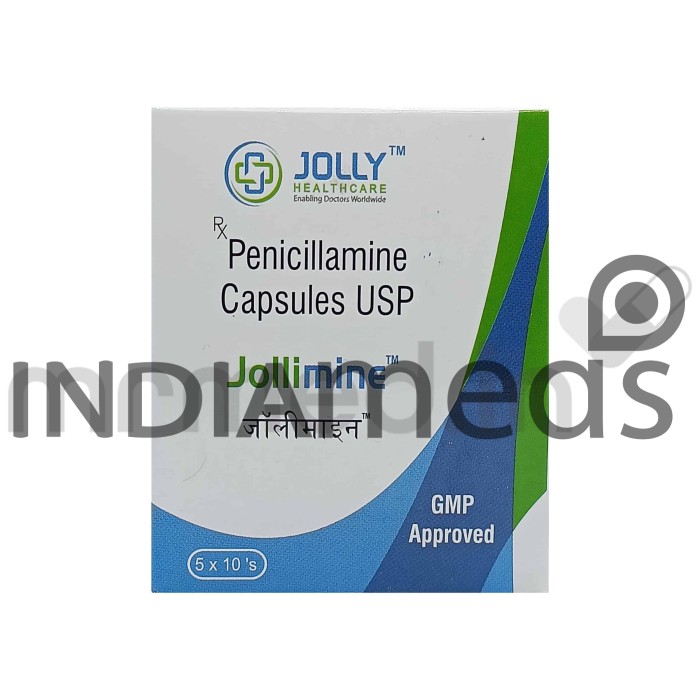
Uses of Jollimine 250mg Capsule
- Relieves pain and stiffness caused by rheumatoid arthritis.
- Treats lead poisoning.
- Treats Still’s disease in children.
- Treats Wilson’s disease.
- Treats cystinuria.
- Treats chronic active hepatitis (a type of liver disease) in adults.
Therapeutic Effects
- Acts as a chelating agent, binding to metals like mercury, lead, copper, iron, and other heavy metals to form soluble complexes that are excreted in urine.
- Lowers excess cystine excretion in cystinuria.
- Inhibits the production of tropocollagen cross-links and cleaves them when newly created.
- Reduces disease activity in rheumatoid arthritis (mechanism uncertain).
Interaction with Other Drugs
- Inform your healthcare provider about all the medicines you take, including prescription, over-the-counter, nutritional supplements, and herbal products.
- Certain medications may interact with Jollimine 250mg Capsule and reduce its effectiveness or cause undesirable side effects.
Storage
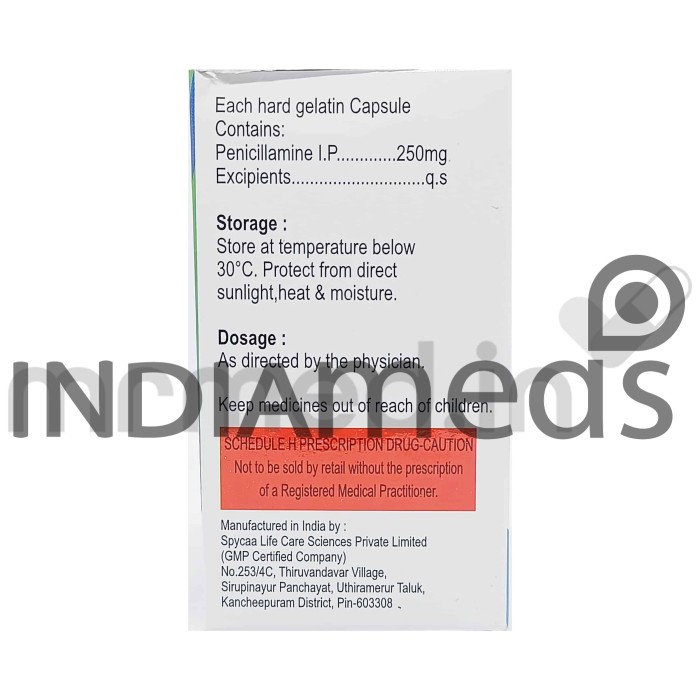
- Store at room temperature below 25°C.
- Do not freeze.
- Keep out of reach of children and pets.
- Do not shake the vials as prolonged shaking may damage the effectiveness of the medicine.
How to Consume
- Take as prescribed by your doctor.
- Swallow the capsules whole with a glass of water.
- Do not break, chew, crush, or dissolve the capsules.
- Take on an empty stomach.
Safety Advices
- Pregnancy: unsafe to administer in pregnant women as it may affect the fetus.
- Breastfeeding: not recommended in patients taking Jollimine 250mg Capsule.
- Lungs: consult your doctor if you have any lung diseases before starting the treatment.
- Liver: use cautiously in patients with liver disorders.
- Alcohol: it is unknown whether consuming alcohol is safe during treatment.
- Driving: does not affect the ability to drive, but if you feel tired or dizzy after taking this medicine, do not drive and consult your doctor for more advice.
Side Effects
- Common: rash, diarrhea, epigastric pain, loss of appetite, loss of taste, nausea, mouth ulcer, vomiting, decreased bone marrow activity, protein in urine.
- Serious: injection site reaction, inflammation of the pancreas, renal injury, liver problems, muscle weakness.
Word of Advice
- Take the medicine as soon as you remember, then just carry on as before.
- Do not take a double dose to make up for a forgotten tablet.
- Do not stop or change your treatment before talking to your doctor.
- Do not take Jollimine 250mg Capsule if you are pregnant or breastfeeding.
- Your doctor may routinely take blood and urine tests to monitor the effectiveness of your treatment.
FAQs
Q 1. How long does it take for Jollimine 250mg capsule to show its therapeutic effects? The time it takes for Jollimine 250mg capsule to demonstrate its therapeutic effects can vary depending on the individual and the treatment condition. Following the prescribed treatment plan and having regular follow-up appointments with your healthcare provider to monitor the progress is important.
Q 2. Can Jollimine 250mg capsule cause allergic reactions? Yes, Jollimine 250mg capsule can potentially cause allergic reactions in some individuals. It is important to inform your healthcare provider if you have a history of allergic reactions to medications or if you experience any signs of an allergic reaction, such as rash, itching, swelling, or difficulty breathing while taking this medicine.
Q 3. What are the common side effects of Jollimine 250mg capsule? The common side effects of Jollimine 250mg capsule are rash, diarrhea, epigastric pain, loss of appetite, loss of taste, nausea, mouth ulcer, vomiting, decreased bone marrow activity, and protein in the urine.
Q 4. How long does it take for Jollimine 250mg capsule to start working? The response to Jollimine 250mg capsule can vary from person to person. Some individuals may start to see improvements in their symptoms within a few weeks, while others may require a longer time to notice a difference. If you did not find any benefit from the medicine, inform your physician and get medical advice.
Fact Box of Jollimine 250mg Capsule
- Molecule name: Penicillamine
- Therapeutic class: Chelating agents
- Pharmacological class: Chelators; DMARDS
- Indications:
- Relieve pain and stiffness caused by rheumatoid arthritis.
- Treats lead poisoning.
- Treats Still’s disease in children.
- Treats Wilson’s disease.
- Treats cystinuria.
- Chronic active hepatitis.