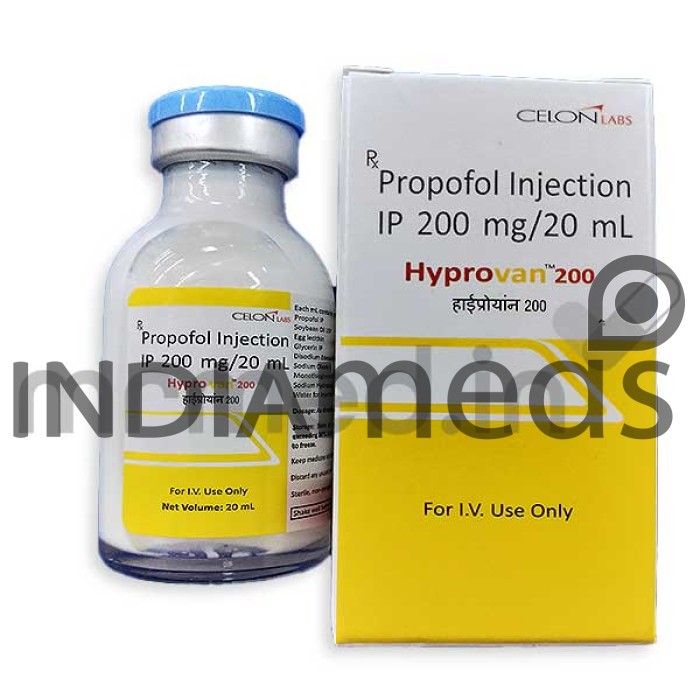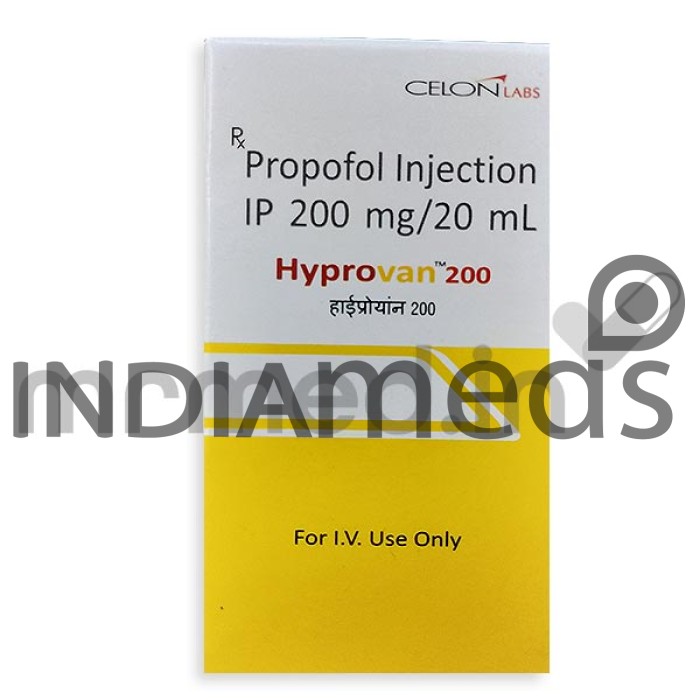
Hyprovan 200mg Injection 20ml
Active substance: propofol.
Class of medicines: general anesthetics.
Uses:
- reversible loss of consciousness (general anesthesia);
- inducing sleep in patients (16 years or older) receiving artificial respiration in an Intensive Care Unit (ICU).
Important information:
- Do not take this medication if you are allergic to propofol or its ingredients.
- Inform your doctor if you are allergic to peanuts or soya, as the medication contains soya oil.
- Before taking this medication, please inform your doctor, anesthetist, or nurse if you have a history of seizures, high blood fat levels, dehydration, or any other health conditions related to your heart, lungs, kidneys, liver, or if you have experienced prolonged illness or have been diagnosed with mitochondrial disease.
Interaction with other drugs:
- Inform your doctor about any prescribed medications, over-the-counter medicines, nutritional or vitamin supplements, and herbal products you take or have taken before the treatment.
- Certain medications may interact with Hyprovan 200mg injection and cause undesirable side effects, especially if you are taking the antibiotic rifampicin (for tuberculosis-TB).
Storage:
- Store Hyprovan 200mg below 25°C.
- Protect from light.
- Keep out of reach of children.
Administration:
- This medicine is given only in a hospital set up by a trained healthcare provider.
- It will be given to you as an injection into a vein, usually in the back of your hand or forearm.
- Your doctor will decide your most apt dosage based on age, body weight, and physical circumstances.
Safety advices:
- Pregnancy: Hyprovan 200mg can pass the placental barrier and cause miscarriage, birth defects, or neonatal depression during pregnancy.
- Breast feeding: Hyprovan 200mg can be excreted into human breast milk and lead to neonatal depression if used during breastfeeding.
- Lungs: Hyprovan 200mg injection is used with caution for severe breathing disorders.
- Liver: Hyprovan 200mg injection can cause enlargement of the liver very rarely.
- Alcohol: Drinking alcohol while using Hyprovan 200mg injection can make the sedation even stronger.
- Driving: Hyprovan 200mg can affect your ability to drive and handle heavy machinery.
Side effects:
- Serious: allergic reactions, stress cardiomyopathy.
- Common: injection site pain, low blood pressure, changes in your breathing pattern, slow heartbeat, nausea and vomiting, headache, withdrawal symptoms, flushing of the skin (in children).
FAQs:
How long does the effect of Hyprovan 200mg injection last? The effect of Hyprovan 200mg injection typically lasts for 24 hours, but this can vary from person to person, depending on the administered dose.
Is Hyprovan 200mg injection indicated for children? Hyprovan 200mg is not recommended to maintain anesthesia in children under one month.
What should I take before getting my Hyprovan 200mg injection? Adults and teenagers over 12 can eat solid foods and dairy products up to 8 hours before their hospital arrival time. Avoid alcohol within 8 hours of your appointment. You can have clear liquids, not dairy, up to 2 hours before surgery to stay hydrated.
What restrictions should I follow after a Hyprovan 200mg injection? It's important to avoid alcohol consumption during the treatment, as it may intensify the sedative effect. Additionally, do not operate a vehicle or heavy machinery since it causes severe drowsiness or dizziness, which may last several hours after the treatment.
Can Hyprovan 200mg injection cause dependence? As a sedative agent, Hyprovan 200mg injection can potentially increase dependence and be subject to abuse. It is strictly not meant for self-administration and should only be administered by a healthcare provider. When used beyond the therapeutic dose, it can be life-threatening.
Can Hyprovan 200mg be taken orally? No, Hyprovan 200mg is typically administered as an injection because most of it is processed by the liver when taken by mouth. So, the usual method for receiving Hyprovan 200mg is through an intravenous (IV) injection (into your veins) administered by a trained anesthesiologist.