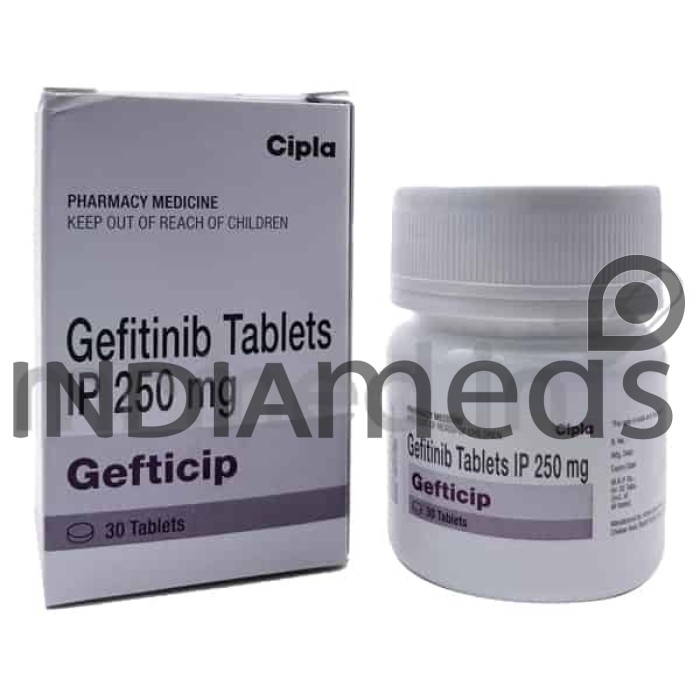
Treatment of non-small cell lung cancer (NSCLC) in patients where the cancer has spread to other parts of the body, who have certain types of abnormal epidermal growth factor (EGFR) genes, and patients who have not received any cancer treatment.
Therapeutic Effects:
An anilinoquinazoline derivative which interacts with a kinase inhibitor that inhibits an abnormal protein called the epidermal growth factor receptor (EGFR). This helps to slow or stop the growth of cancer cells and reduce the size of tumors in patients with NSCLC.
Dosage and Administration:
The medicine will be prescribed to you by a healthcare professional in a hospital setting.
Gefticip 250mg Tablet is available as a tablet to be taken with or without food, as directed by your healthcare provider.
The usual recommended dosage is 250 mg tablet once daily.
Avoid crushing, opening, or dissolving the tablet, swallow it whole with a glass of water.
Take this tablet at the same time every day.
Safety Advice:
Pregnancy: it is unsafe to use during pregnancy. Consult your doctor if you are pregnant or planning for pregnancy during the treatment.
Breastfeeding: it is unsafe to breastfeed during the treatment with this Gefticip 250mg Tablet because it may cause harm to the baby. Please consult your doctor before breastfeeding.
Lungs: it is unknown whether Gefticip 250mg Tablet can be used for patients with lung problems. Consult your doctor if you have any lung diseases before starting the treatment.
Liver: it is unknown whether Gefticip 250mg Tablet can be used for patients with liver disorders. Inform your physician if you have any liver problems before starting treatment.
Alcohol: it is unknown whether consuming alcohol interacts with the Gefticip 250mg Tablet. Please consult your doctor for more advice.
Driving: it is unsafe to drive vehicles or operate heavy machinery after taking the Gefticip 250mg Tablet because it contains a small amount of alcohol which may cause dizziness and impair your concentration.
Side Effects:
Common side effects include diarrhea, nausea, vomiting, loss of appetite, weakness, red or sore mouth, increased liver enzymes, itchy or cracked skin, dry mouth, dry, red or itchy eyes, nail problems, hair loss, fever, blood in the urine and burning sensation while urinating.
Word of Advice:
Gefticip 250mg Tablet is not recommended for children and adolescents below 18.
Monitor your blood pressure regularly during this treatment.
Avoid high-fiber foods and drink lots of fluids if you have severe diarrhea.
Antacids should not be used two hours before or one hour after taking this Tablet.
Avoid driving and operating heavy machinery if you feel tired or weak during this treatment.
FAQs:
Q 1. What are the Gefticip 250mg Tablet side effects?
Diarrhea, nausea, vomiting, loss of appetite, weakness, red or sore mouth, increased liver enzymes, itchy or cracked skin, dry mouth, dry, red or itchy eyes, nail problems, hair loss, fever, nosebleed, blood in the urine and burning sensation while urinating are the common Gefticip 250mg Tablet side effects.
Q 2. Is Gefticip 250mg Tablet targeted therapy?
Yes, Gefticip 250mg Tablet is a targeted drug therapy that helps to treat advanced non-small-cell lung cancer (NSCLC).
Q 3. Who should not use Gefticip 250mg Tablet?
Gefticip 250mg Tablet is not indicated for children and adolescents under the age of 18. It should not be used in people who are allergic to this drug, as well as pregnant or breastfeeding women.
Q 4. Is it safe for women of reproductive potential to use Gefticip 250mg Tablet?
Gefticip 250mg Tablet are not recommended for use during pregnancy and breastfeeding. Tell your healthcare provider before starting this treatment if you are pregnant, think you might be pregnant, breastfeeding, or planning to have a baby.
Q 5. What should I avoid while taking Gefticip 250mg Tablet?
It is advised to avoid taking an antacid or stomach acid-reducing medication within two hours before or one hour after taking a Gefticip 250mg Tablet.