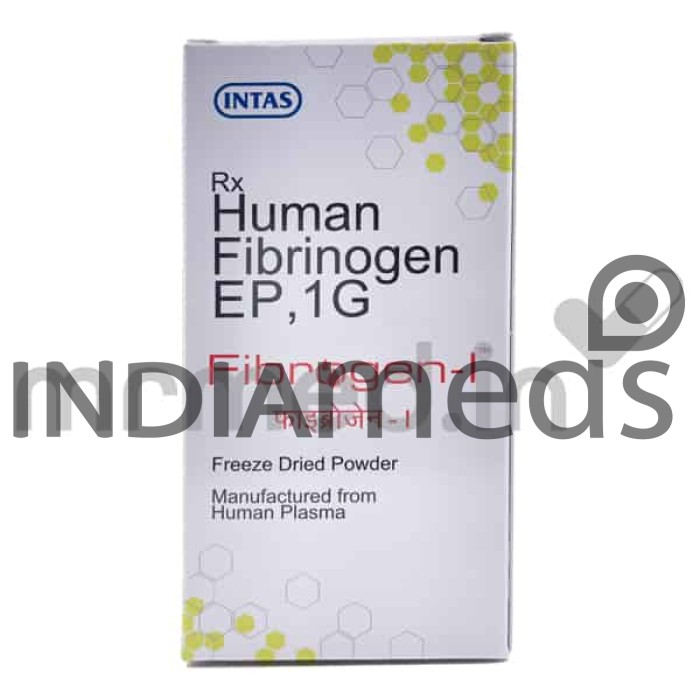
Fibrinogen-I Injection
Uses:
- Fibrinogen replacement therapy for bleeding disorders.
- Coagulation management in liver diseases.
- Disseminated intravascular coagulation (DIC).
- Afibrinogenemia.
- Hypofibrinogenemia.
Therapeutic Effects:
- Fibrinogen-I Injection molecules are converted into fibrin by the enzyme thrombin.
- Fibrin strands form a meshwork, trapping blood cells and creating a stable blood clot at the site of injury or bleeding.
- Enhances the body's ability to form essential blood clots, preventing excessive bleeding in individuals with Fibrinogen-I Injection deficiency disorders.
Interaction with Other Drugs:
- Inform the doctor about all medications, including prescription, over-the-counter, nutritional or vitamin supplements, and herbal products.
- Certain medications may interact with Fibrinogen-I Injection, reducing effectiveness or causing undesirable side effects.
Storage:
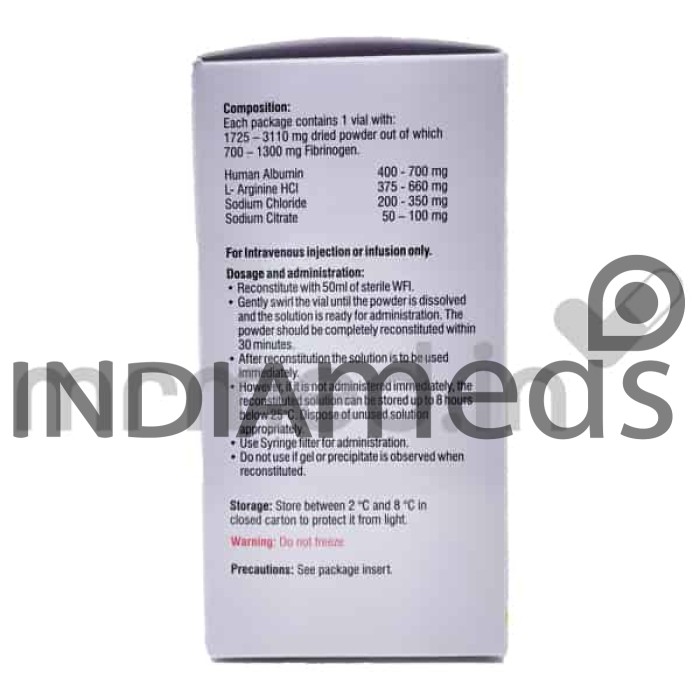
- Store at room temperature from 2°C to 8°C.
- Keep away from moisture, heat, and light.
- Do not freeze.
- Keep away from children and pets.
Administration:
- Can be administered through intravenous (IV), intramuscular (IM), and, in some cases, intraarterial (IA) routes.
- The healthcare provider determines the choice of administration route based on the patient's needs and the urgency of treatment.
Safety Advices:
- Pregnancy: consult your doctor before using it.
- Breastfeeding: generally safe to take while breastfeeding, but consult your doctor.
- Lungs: consult with a healthcare provider if you have lung conditions.
- Liver: consult a healthcare provider before using Fibrinogen-I Injection if you have liver conditions.
- Alcohol: it is not safe to take Fibrinogen-I Injection with alcohol.
- Driving: if you have Fibrinogen-I Injection deficiency and you need to drive, talk to your doctor.
Side Effects:
- Serious: allergic reactions, transfusion-related acute lung injury (TRALI), transfusion-associated circulatory overload (TACO), transfusion-transmitted infections, thrombosis, fluid overload.
- Common: fever, chills, flushing, nausea, headache, mild allergic reactions (itching, hives).
Word of Advice:
- Assess patients for allergies, potential allergic reactions, and underlying medical conditions like cardiovascular, liver, or kidney diseases.
- Medication interactions, especially with anticoagulants or antiplatelet drugs, must be considered, and dosages adjusted accordingly.
- Thrombocytopenia, kidney dysfunction, and multiple transfusions can affect treatment response and require close monitoring.
- Patients receiving it from human plasma should be informed of the minimal risk of viral transmission.
FAQs:
Is Fibrinogen-I Injection therapy a lifelong treatment for congenital Fibrinogen-I Injection deficiency? For individuals with congenital fibrinogen deficiency, fibrinogen-I injection therapy is often required throughout their lifetime to prevent bleeding episodes. The treatment plan is tailored to the patient's specific needs.
Can Fibrinogen-I Injection therapy cause blood clots (thrombosis)? While Fibrinogen-I Injection therapy promotes clot formation, it must be administered carefully to avoid excessive clotting (thrombosis). Patients at risk of thrombosis or with a history of clotting disorders should be monitored during treatment.
Is it safe to receive too much Fibrinogen-I Injection? Yes, excessive fibrinogen-I injection therapy can lead to an increased risk of thrombosis (clot formation). Healthcare providers closely monitor fibrinogen levels during treatment to ensure they remain within the desired range.
Can Fibrinogen-I Injection be used in rare bleeding disorders other than fibrinogen deficiency? Fibrinogen-I Injection may be considered in rare bleeding disorders characterized by dysfunction in fibrinogen function or in cases of acquired fibrinogen deficiencies due to underlying medical conditions.
Is it safe to resume Fibrinogen-I Injection after experiencing side effects? Whether to continue Fibrinogen-I Injection after experiencing side effects should be carefully evaluated by healthcare providers. In some cases, therapy may be resumed with precautions, while alternative treatments may be considered in others.
Fact Box:
- Molecule name: Fibrinogen.
- Therapeutic class: Coagulation Factor Replacement.
- Pharmacological class: Hemostatic Agent.
- Indications:
- Fibrinogen-I Injection replacement therapy for bleeding disorders.
- Coagulation management in liver diseases.
- Disseminated intravascular coagulation (DIC).
- Afibrinogenemia.
- Hypofibrinogenemia.