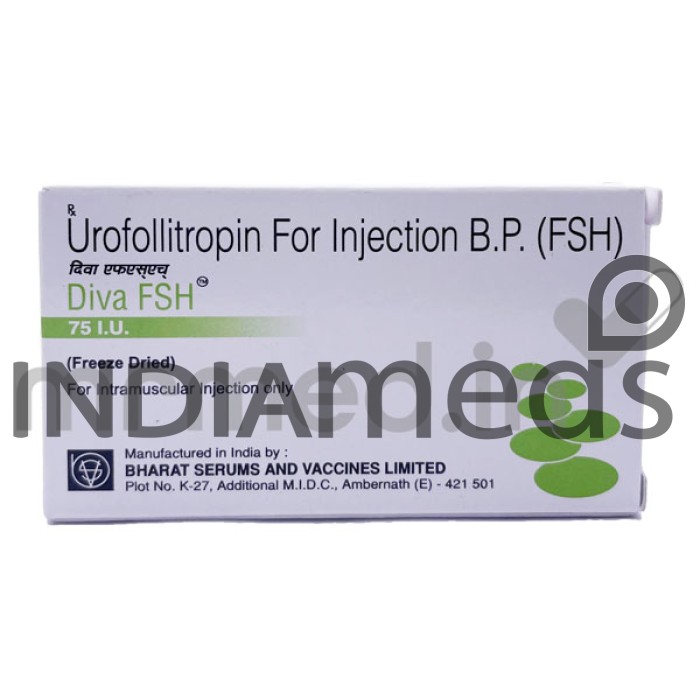
Diva FSH 75IU Injection
Uses:
- Treatment of infertility in women who are not ovulating, including those with polycystic ovarian disease (PCOD) and who have not responded to treatment with clomiphene citrate.
- Promotion of multiple follicles to enhance fertility in women undergoing IVF (in-vitro fertilization) or other assisted conception methods.
- Treatment of infertility in men due to low sperm count.
Important Information:
- Do not take if you are allergic to the medicine or any of its ingredients.
- Do not take if you have a tumor in the pituitary gland, hypothalamus, uterus, ovaries, breast, testicles, or prostate gland.
- Do not take if you have ovarian cysts not due to PCOD, vaginal bleeding, early menopause, physical problems in the reproductive organs, or if your womb has been removed.
- Do not take if you are pregnant or breastfeeding.
Before Starting Treatment:
- Consult your doctor if you have underactive thyroid problems, hormone level imbalances, or tumors of the pituitary and hypothalamus.
- Inform your physician about all medications you are taking, including prescription, over-the-counter, nutritional supplements, and herbal products.
Therapeutic Effects:
- In the absence of sufficient endogenous luteinizing hormone (LH), Diva FSH 75IU Injection binds to the follicle-stimulating hormone receptor (FSH), resulting in ovulation.
- It also attaches to the LH receptor, causing appropriate hormone release and treating infertility in women.
Interaction with Other Drugs:
- Inform your healthcare provider about all the medicines you take. Certain medications may interact with Diva FSH 75IU Injection and reduce its effectiveness or cause undesirable side effects.
Storage:
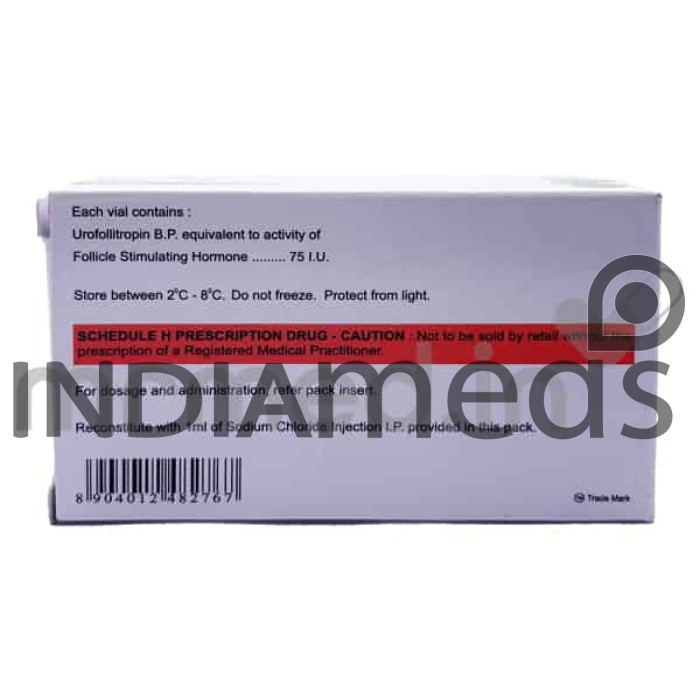
- Store Diva FSH 75IU Injection between 2°C to 8°C.
- Do not freeze.
Administration:
- Diva FSH 75IU Injection will be given to you by a doctor or nurse in a hospital or clinic setting.
- It is given as an intramuscular injection (into your muscles) or under the skin.
- Do not self-administer the injection.
- Your doctor will decide the dose, route of administration, and duration of the treatment based on your disease severity, body weight, and other factors.
Safety Advices:
- Pregnancy: Diva FSH 75IU Injection is unsafe to administer in pregnant women because it may affect the fetus.
- Breastfeeding: Breastfeeding is not recommended in patients taking Diva FSH 150IU Injection because the medicine passes into the breast milk in small amounts and may harm your baby.
- Lungs: It is unknown whether Diva FSH 150IU Injection can be used in patients with lung disorders. Consult your doctor if you have any lung diseases before starting the treatment.
- Liver: It is unknown whether Diva FSH 150IU Injection can be used in patients with liver disorders. Consult your doctor if you have any liver problems before starting the treatment.
- Alcohol: It is unknown whether consuming alcohol is safe during the treatment with Diva FSH 150IU Injection. Inform your doctor if you are a chronic drinker.
- Driving: Diva FSH 150IU Injection does not affect the ability to drive. If you feel tired or dizzy after taking this medicine, do not drive and consult your doctor for more advice.
Side Effects:
- Common: abdominal pain or swelling, headache, nausea, pelvic pain, overstimulation of ovaries, pain or inflammation at the injection site, mood swings.
- Serious: severe allergic reactions (hypersensitivity reactions).
Word of Advice:
- If you have missed any dosing appointments, inform your doctor and schedule immediately.
- Diva FSH 150IU Injection can increase your risk of ectopic pregnancy (pregnancy outside of the womb) if you have a history of fallopian tube disease, miscarriage, multiple pregnancies (twins and triplets), and birth defects in the baby.
- Your doctor will regularly perform ultrasound scans and blood tests to monitor your response to the treatment.
FAQs:
Q1. What is the purpose of using Diva FSH 150IU Injection in fertility treatments?
Diva FSH 150IU Injection is used in fertility treatments to help multiple follicles and stimulate the ovaries in women who are undergoing assisted reproductive technologies such as in vitro fertilization (IVF) or intrauterine insemination (IUI). It helps promote the growth, maturation, and release of eggs from the ovaries in women who are not ovulating, including those with PCOD, and who have not responded to treatment with another medicine called clomiphene citrate.
Q2. What are the possible side effects of Diva FSH 150IU Injection?
Common side effects of Diva FSH 150IU Injection may include injection site reactions, abdominal discomfort, bloating, breast tenderness, headache, and mood swings. However, individual responses may vary, and it is important to discuss any concerns or unexpected side effects with a healthcare professional.
Q3. Can Diva FSH 150IU Injection be used in men for fertility treatment?
Diva FSH 150IU Injection is primarily used in women to stimulate ovulation and promote fertility. It is also used to treat infertility in men due to low sperm count. If you have concerns about male fertility, it is recommended to consult with a healthcare professional for appropriate evaluation and guidance.
Q4. Can Diva FSH 150IU Injection increase the chances of multiple pregnancies?
Yes, the use of Diva FSH 150IU Injection in fertility treatments can increase the chances of multiple pregnancies, including twins, triplets, or higher-order multiples. This is due to the stimulation of multiple follicles and the potential release of multiple eggs. The risk of multiple pregnancies is a consideration that healthcare providers take into account when determining the dosage and monitoring the treatment.
Q5. What is the source of Diva FSH 150IU Injection?
Diva FSH 150IU Injection is a highly purified mixture of two hormones called follicle-stimulating hormone (FSH) and luteinizing hormone (LH). FSH and LH are natural hormones produced in both males and females. They help the reproductive organs to work normally.
Fact Box:
- Molecule Name: Urofollitropin
- Therapeutic class: Infertility
- Pharmacological class: Gonadotropins
- Indications: Infertility in women
Tags:
diva-fsh-injection, fsh-injection-75iu, hormone-therapy-injection, fertility-treatment-injection, diva-pharmaceuticals, hormone-treatment-products







-200x200.jpg "Paradox Babies Syrup")