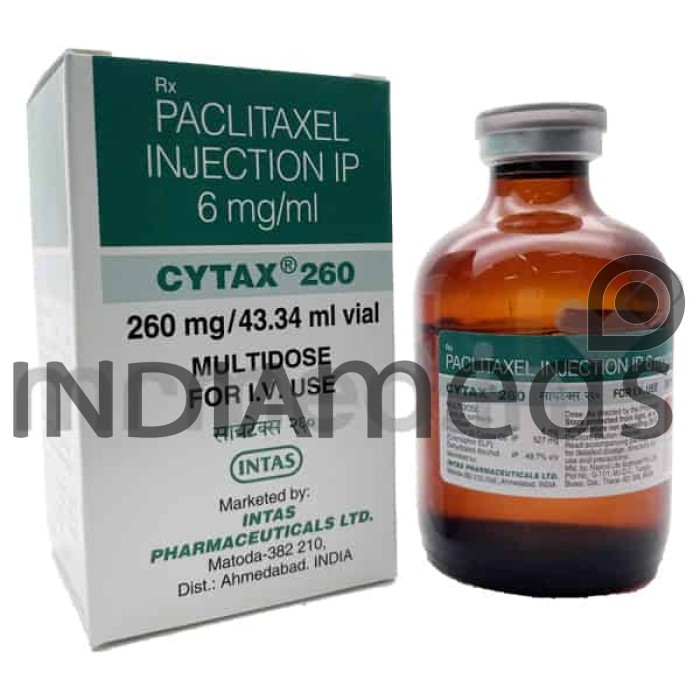
Uses:
- Ovarian cancer;
- Breast cancer;
- Non-small cell lung cancer;
- AIDS-related Kaposi’s sarcoma.
Mechanism of action: Cytax 260 mg Injection binds to β-tubulin subunits of microtubules, interferes with interphase and mitotic functions, and prevents the growth of cancer cells.
Important information:
- This medicine is not recommended for adolescents and children under the age of 18.
- Talk to your doctor if you have heart disorders before taking this medicine.
- Administration of this medicine can cause serious allergic reactions.
- Use effective birth control during the treatment and for at least six months after the last dose.
- This Injection may harm patients suffering from alcoholism as it contains alcohol.
- Keep Cytax 260 mg Injection out of sight and reach of children.
- Do not store above 25°C.
Interaction with other drugs: Inform your doctor about any prescribed medicines, over-the-counter medications, nutritional and vitamin supplements, or herbal products that you are taking or have taken before the treatment. Certain medications may interact with Cytax 260 mg injection and cause undesirable side effects.
Safety advice:
- Pregnancy: Cytax 260 mg Injection can harm your unborn baby. Tell your doctor if you are pregnant or planning to get pregnant before taking this Injection.
- Breast feeding: Stop breastfeeding during the treatment with Cytax 260 mg Injection. Consult your doctor for potential risks.
- Lungs: It is unknown whether Cytax 260 mg injection can be given to patients with lung disorders. Please consult your physician for more advice.
- Liver: It is contraindicated in patients with severe liver disorders. Inform your doctor if you have any liver disorders before taking Cytax 260 mg Injection.
- Alcohol: It is unsafe to consume alcohol with Cytax 260 mg Injection.
- Driving: The alcohol present in Cytax 260 mg Injection may affect your ability to drive. Avoid driving if you feel unwell.
Side effects:
- Serious: serious allergic reactions (rash, swelling of face, lips, throat, or tongue, trouble breathing, and swallowing), severe diarrhea, severe stomach pain.
- Common: anemia, feeling tired, hair loss, burning, tingling, or numbness in your feet or hands, muscle and joint pain, vomiting, nausea, mouth or lip sores, infections, swelling of hands, feet, and face, bleeding, irritation at the injection site, low blood pressure.
Word of advice: Inform the doctor if the patient is allergic to this medication, liver, heart conditions, and other medication taken for different medical conditions before taking this medicine. Liver, blood pressure, and blood count should be monitored while taking this medication.
FAQs:
- Q 1. Can Cytax 260 mg Injection cause hair loss? Yes, the common side effects of this medication are hair loss, and inform the doctor if there is excessive hair loss.
- Q 2. How does Cytax 260 mg Injection work? It works by interfering with the microtubule structures, which help the cancer cells to divide and multiply, and it slows the growth of cancer cells.
- Q 3. Does Cytax 260 mg Injection cause liver problems? Yes, this medication is contraindicated in patients with severe liver disorders. Inform the doctor before starting this medication.
- Q 4. Can I take Cytax 260 mg Injection while driving? It is unsafe to use this medication while driving because it can cause dizziness, lack of concentration, and alertness.
- Q 5. What are the side effects of Cytax 260 mg Injection? The common side effects of Cytax 260 mg injection are anemia, hair loss, numb feet or hands, muscle pain, nausea, vomiting, infections, swelling, bleeding, irritation on the injection site, and low blood pressure.
- Q 6. Can I take Cytax 260 mg Injection during pregnancy? It is unsafe to take this medication during pregnancy as it causes harmful effects on the developing baby. Inform the doctor if the patient is planning for pregnancy before starting this medication.
Fact box:
- Molecule name: Paclitaxel.
- Therapeutic class: Anti-Microtubular Agents.
- Pharmacological class: Anti-Neoplastics.
- Indications:
- Ovarian cancer;
- Breast cancer;
- Non-small cell lung cancer;
- AIDS-related Kaposi’s sarcoma.