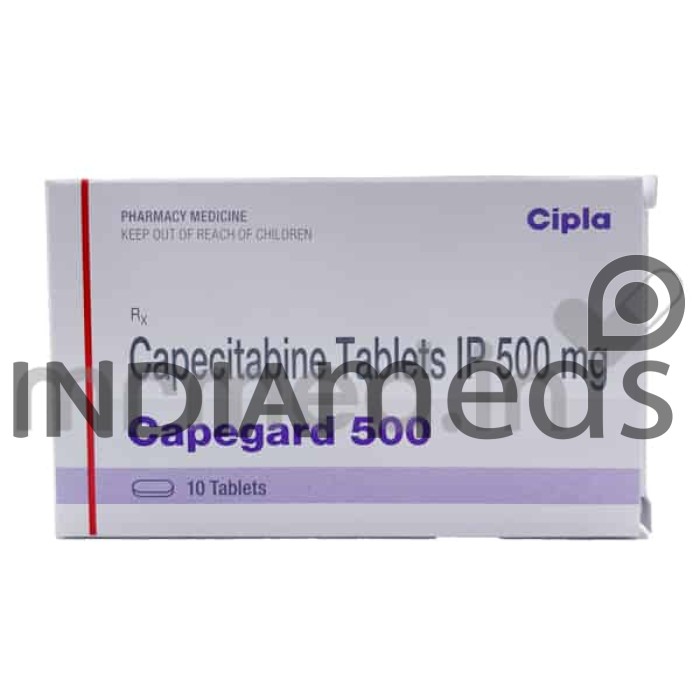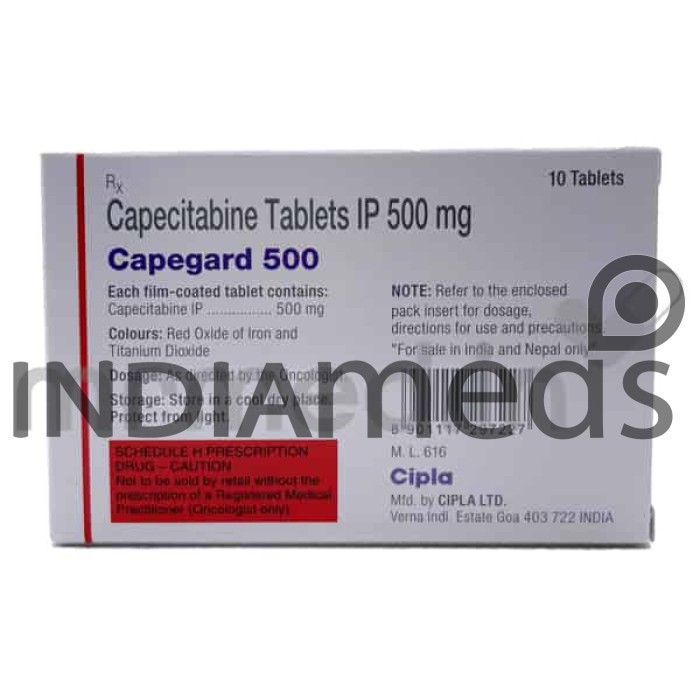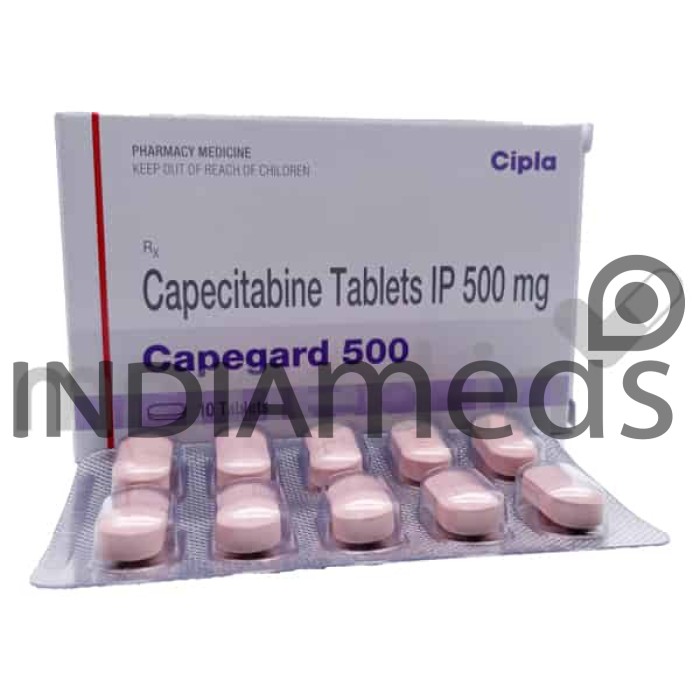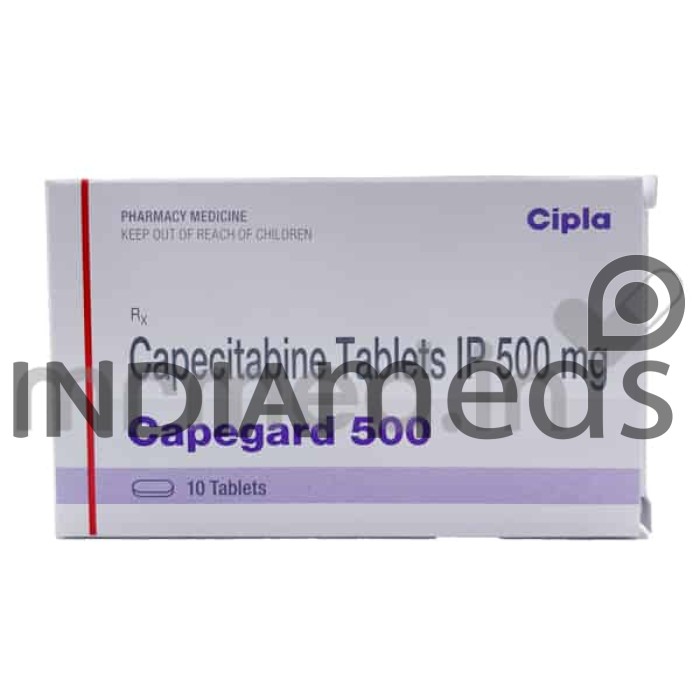
Active ingredient: Capecitabine
Therapeutic class: Antimetabolite
Pharmacological class: Nucleoside metabolic inhibitor
Uses:
- Adjuvant colon cancer;
- Metastatic colorectal cancer;
- Metastatic breast cancer.
Important information:
- Capegard 500mg Tablet is used in combination with other anticancer drugs.
- It is not recommended for children and adolescents.
- Before taking this medicine, consult a physician if you are intolerant to sugars as this chemotherapy medication contains lactose.
- Do not take this drug if you have low white blood cell or platelet count, chickenpox, shingles, or enzyme DPD deficiency (dihydropyrimidine dehydrogenase).
- Take this medicine within thirty minutes after finishing a meal.
- Capegard 500mg Tablet is not recommended for pregnant women as it may cause fetal harm.
Side effects:
- Serious: severe bloody diarrhoea, abdominal pain, heart problems, loss of too much body fluid, kidney failure, serious skin and mouth reactions, hand and foot syndrome, liver problems, decreased blood count.
- Common: loss of appetite, weight loss, insomnia, depression, headache, dizziness, eye irritation, redness, increased tears, inflammation of veins, runny nose, fever, infections, hair loss, pain in joints, back, dry mouth, indigestion, constipation.
Safety advices:
- Pregnancy: Capegard 500mg Tablet is not recommended for pregnant women.
- Breast feeding: Consult your doctor about the best way to feed your baby if you receive this drug.
- Lungs: Consult your doctor if you have any lung diseases before starting the treatment.
- Liver: Inform your doctor if you have any liver disorders before taking Capegard 500mg Tablet.
- Alcohol: Consult your doctor for more advice.
- Driving: Capegard 500mg Tablet may cause drowsiness which can affect the patient’s ability to drive or use machines.
FAQ:
Is Capegard 500mg Tablet prescribed as a monotherapy? Capegard 500mg Tablet is prescribed as a monotherapy and also in combination with other anticancer agents like Docetaxel and Oxaliplatin to treat breast and colorectal cancer respectively.
What tests are essential before starting treatment with Capegard 500mg Tablet? Before starting treatment with Capegard 500mg Tablet, your healthcare provider will recommend tests for pregnancy, DPD deficiency (dihydropyrimidine dehydrogenase), prothrombin time, INR, kidney function tests and serum electrolytes.
Is it safe to undergo surgery during the treatment with Capegard 500mg Tablet? It is suggested to avoid planning for surgery while on treatment with Capegard 500mg Tablet. Tell your physician before you undergo surgery or dental procedures.
What should you do if you missed a dose of Capegard 500mg Tablet? If you missed taking a dose of Capegard 500mg Tablet, skip this dose. Do not take two tablets to make up for the missed dose. Report to your healthcare provider right away if you missed taking more than two doses of this drug.
Who should not take Capegard 500mg Tablet? Capegard 500mg Tablet is not recommended for people who are allergic to this drug, 5-fluorouracil and their ingredients. It is also contraindicated in people with severe kidney disease and DPD deficiency (dihydropyrimidine dehydrogenase).
Can you smoke while on treatment with Capegard 500mg Tablet? It is not recommended to smoke cigarettes while on treatment with Capegard 500mg Tablet as smoking can reduce the concentration of drug in the body.
How do you know if you have overdosed on Capegard 500mg Tablet? Watch out for symptoms like nausea, gastric irritation, diarrhea, vomiting, bleeding and seek immediate medical attention from a nearby healthcare facility.
Storage: Store Capegard 500mg Tablet in the original package at room temperature (20°C to 25°C). Do not freeze. Keep it out of reach from children and pets.