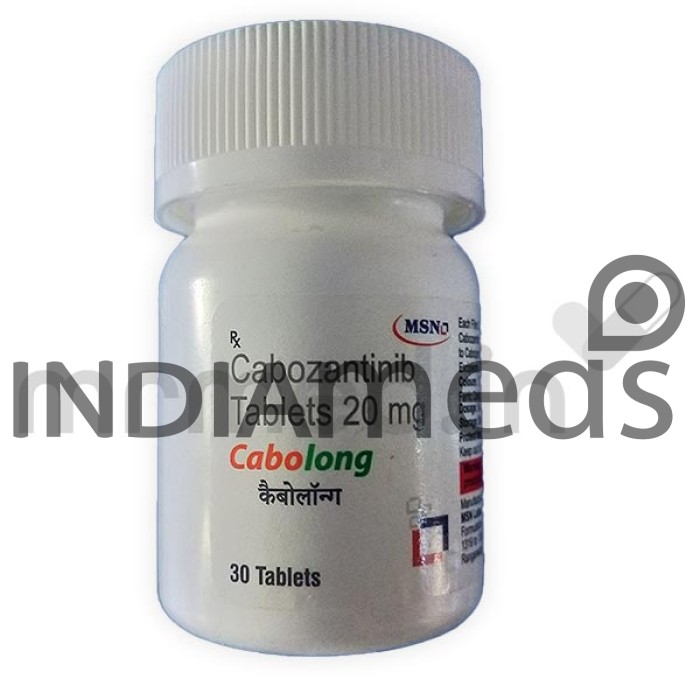
Uses:
- Advanced renal cell carcinoma;
- Liver cancer (when Sorafenib is no longer effective);
- Differentiated thyroid cancer.
Mechanism of action:
- Cabolong 20mg acts against receptor tyrosine kinases, interfering with cell signaling and stopping the growth and spread of cancer cells.
Important information:
- Do not take Cabolong 20mg if you are allergic to Cabozantinib or its other ingredients.
- Inform your physician about any existing medical conditions, such as liver disease, inflammatory bowel disease, high blood pressure, heart disease, or diarrhea.
- Notify your doctor about a history of blood clots, significant bleeding, aneurysm, or tears in the blood vessel wall.
- Pregnancy and breastfeeding: Cabolong 20mg is unsafe during pregnancy and breastfeeding.
- Surgery: Inform your physician if you have had surgery, including dental surgery, within the last month.
- Grapefruit and grapefruit juice should be avoided during treatment.
- Lactose intolerance: Inform your doctor if you are intolerant to any sugar.
Dosage and administration:
- Take Cabolong 20mg as advised by your physician.
- Usually taken once a day.
- Do not crush, chew, or open the medicine.
- The correct dosage and duration are determined by the physician based on age, body weight, and disease condition.
Safety advice:
- Driving: It is unsafe to drive or use machines while taking Cabolong 20mg due to potential side effects such as nausea and changes in vision.
- Alcohol: The safety of consuming alcohol while taking Cabolong 20mg is unknown. Consult your physician.
Side effects:
- Serious: gastrointestinal perforation, severe or uncontrollable bleeding, shortness of breath, nonhealing wound, pain in the mouth, jaw/teeth, hand, feet, loss of consciousness, drowsiness, swelling or sores in the mouth, blood vomiting, black stools, blood in urine, headache, coughing blood.
- Common: dehydration, difficulty swallowing, ringing in the ears, blood clots in the veins, fluctuation in blood sugar levels, lower level of albumin, electrolyte imbalance, increased levels of liver enzymes, elevated cholesterol levels in the blood, hair loss, changes in hair color, muscle spasm, skin thickening, dry skin, itching, protein in urine.
FAQ:
Can Cabolong 20mg cause a lower level of albumin? Yes, one of the common side effects is a lower level of albumin. Contact your physician immediately if you experience any side effects.
Why is it recommended to use effective contraception during the treatment of Cabolong 20mg? Oral contraception may be ineffective, so it is better to discuss effective contraception with your doctor.
Why is liver enzyme getting elevated during treatment with Cabolong 20mg? The reason for this elevation is not completely understood, but it is thought to be related to the drug's effects on certain enzymes involved in liver function. The elevation in liver enzymes is generally mild and temporary.
How can I manage diarrhea while taking Cabolong 20mg? Stay hydrated by drinking plenty of fluids. Your doctor may recommend over-the-counter or prescription medications to help manage diarrhea. If diarrhea is severe or persistent, contact your doctor.
Is Cabolong 20mg a chemotherapy drug? Yes, Cabolong 20mg is a chemotherapy medication that belongs to the group of Tyrosine kinase inhibitors.
Fact box:
- Molecule name: Cabozantinib;
- Therapeutic class: Antineoplastics;
- Pharmacological class: Tyrosine kinase inhibitor.