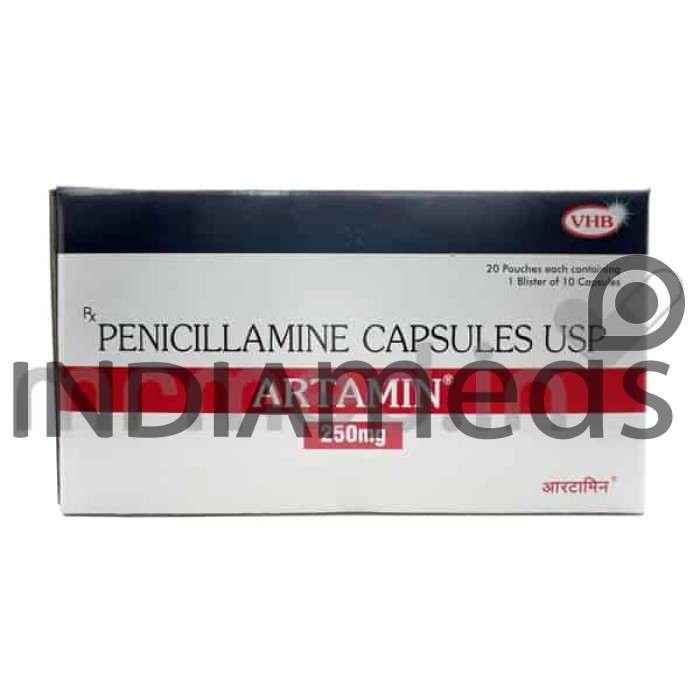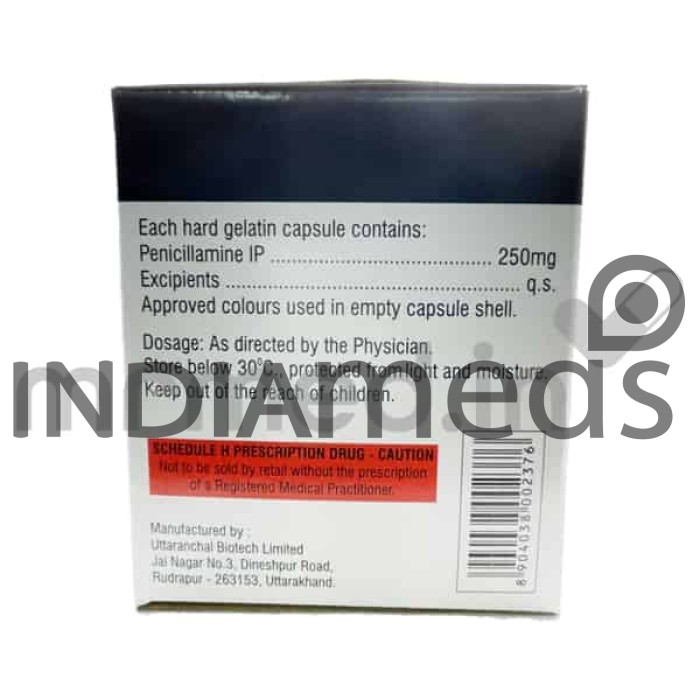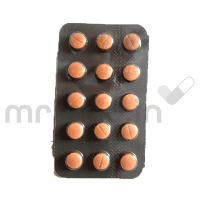
Artamin 250mg Capsule
Uses:
- Treatment of Wilson's disease (a rare genetic disorder causing copper accumulation in the body).
- Management of cystinuria (an inherited kidney condition).
- Control of rheumatoid arthritis (chronic joint inflammation).
- Treatment of heavy metal poisoning, such as lead, mercury, and arsenic.
- Prevention of recurrent calcium oxalate kidney stones.
Therapeutic Effects:
- Artamin 250mg Capsule functions as a chelating agent, binding to excess copper within the body. It forms a complex with copper, creating a compound that can be excreted through urine.
- Binding to copper prevents its accumulation in tissues, particularly in the liver and brain, which is crucial in managing the symptoms of Wilson's disease.
Interaction with other drugs:
- Inform the doctor about all medicines, including prescription, over-the-counter, nutritional or vitamin supplements, and herbal products.
- Certain medications may interact with Artamin 250mg Capsule, reducing effectiveness or causing undesirable side effects.
Storage:
- Store at controlled room temperature, between 20°C to 25°C.
- Keep away from moisture, heat, and light.
- Do not freeze.
- Keep away from children and pets.
How to consume:
- Artamin 250mg Capsule is primarily administered orally.
- The healthcare provider will determine the dosage and duration of treatment based on the specific condition and individual factors.
Safety Advices:
- Pregnancy: it is not safe to take Artamin 250mg Capsule during pregnancy as it may cause harm to the unborn baby.
- Breastfeeding: it is not safe to breastfeed while taking Artamin 250mg Capsule, as it may pass into breast milk and harm the infant.
- Consult your healthcare provider before taking Artamin 250mg Capsule if you have lung or liver disease.
- Alcohol consumption might exacerbate certain side effects of the medication.
- Artamin 250mg Capsule is not generally known to impair the ability to drive or operate machinery directly. Consult your healthcare provider if you feel any dizziness after taking it.
Side Effects:
- Serious: severe allergic reactions, bone marrow suppression, kidney problems, severe skin reactions, liver problems.
- Common: nausea and vomiting, loss of appetite, skin rashes, metallic taste, joint pain.
Word of Advice:
- Close monitoring of blood counts, kidney function, liver function, and urine tests is essential during Artamin 250mg Capsule treatment.
- Immediate medical attention is needed for symptoms like rash, itching, swelling, severe dizziness, or difficulty breathing.
- Caution is advised in individuals with pre-existing kidney or liver issues.
- Inform your healthcare provider about all medications, including over-the-counter drugs, supplements, or herbal remedies, as they may interact with this medication.
FAQs:
What are the common side effects of Artamin 250mg Capsule? Common side effects include nausea, vomiting, skin rashes, metallic taste, and joint pain. However, these can vary among individuals.
How long does it take for Artamin 250mg Capsule to start working? The time for Artamin 250mg Capsule to show its effects can vary based on the condition being treated. In some cases, it might take weeks to months to observe significant improvements.
Can Artamin 250mg Capsule be stopped suddenly? No, abrupt discontinuation can lead to adverse effects or disease exacerbation. Always consult a healthcare provider before stopping the medication.
Can Artamin 250mg Capsule be taken with food? Generally, it is recommended to take Artamin 250mg Capsule on an empty stomach, at least 1 hour before or 2 hours after meals, to maximize absorption. However, follow your doctor's instructions.
Can Artamin 250mg Capsule cause weight gain or loss? Changes in weight are not commonly reported side effects. However, individual reactions to medications can vary.
What should I do if I miss a dose of Artamin 250mg Capsule? Take it as soon as you remember. If it's close to the time of your next dose, skip the missed dose and continue with your regular schedule. Do not double the dose to catch up.
Fact Box:
- Molecule name: D-Penicillamine.
- Therapeutic class: Chelating agent.
- Pharmacological class: Disease-Modifying Antirheumatic Drug (DMARD).
- Indications: Wilson's disease treatment, cystinuria management, rheumatoid arthritis control, heavy metal poisoning treatment, prevention of recurrent stones.