Description:
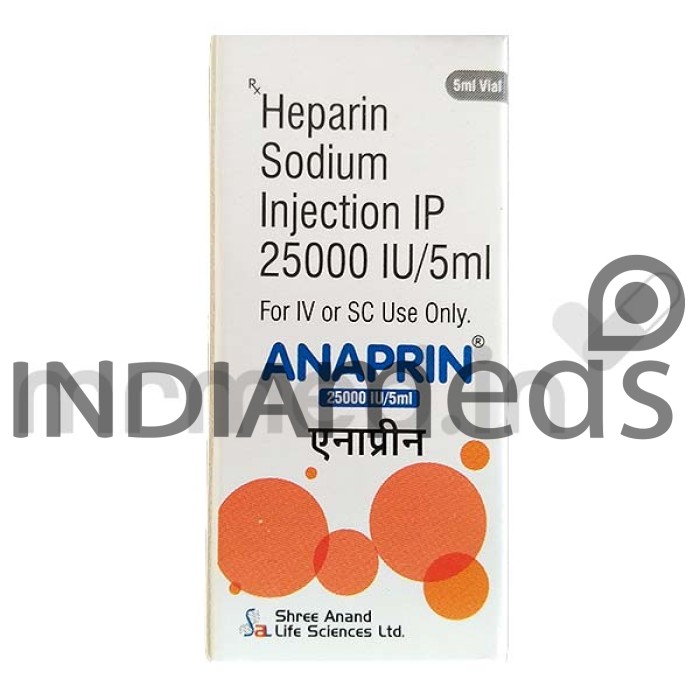
- Contains Heparin as the active component.
- An anticoagulant medication that prevents the formation of blood clots.
Uses:
- Deep vein thrombosis.
- Pulmonary embolism.
- Disseminated intravascular coagulation.
- Venous thromboembolism prophylaxis.
- Atrial fibrillation with a high risk of stroke.
- Hemodialysis.
- Pregnancy-related thrombosis.
Mechanism of Action:
- Enhances the activity of antithrombin III, a natural anticoagulant protein.
- Binds to antithrombin III, accelerating its inhibitory effect on clotting factors.
- Disrupts the blood coagulation cascade, preventing fibrin formation.
Administration:
- Typically administered by injection, either intravenously (IV) or subcutaneously.
- Dosage and method depend on the medical condition, patient's weight, age, and other factors.
- Continuous monitoring required for IV use in hospital settings.
- Subcutaneous injections often used for prophylactic purposes or in outpatient settings.
Safety Advice:
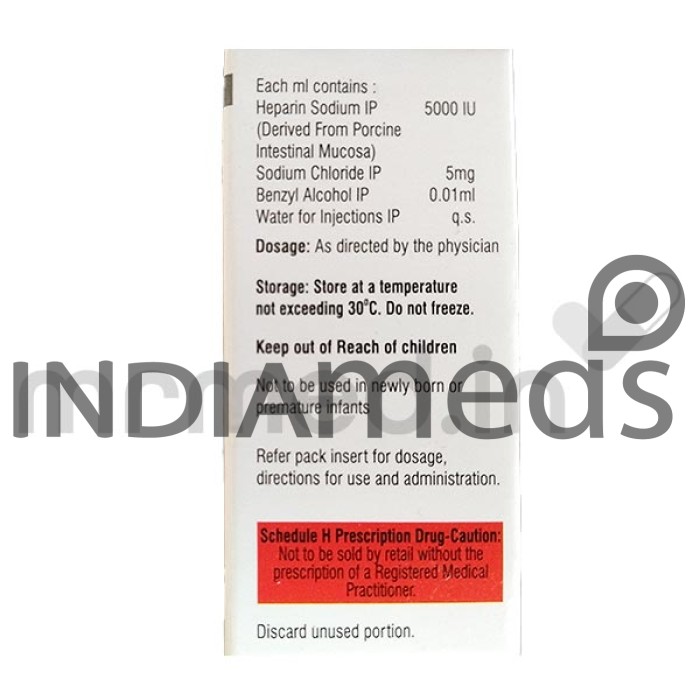
- Store at room temperature, between 20°C to 25°C (68°F to 77°F).
- Keep away from moisture, heat, and light.
- Do not freeze.
- Keep away from children and pets.
- Inform healthcare provider about all medications, including prescription, over-the-counter, nutritional or vitamin supplements, and herbal products.
Pregnancy and Breastfeeding:
- Generally considered safe during pregnancy.
- Discuss specific situation with healthcare provider during breastfeeding.
Liver and Alcohol:
- Relatively safe for patients with liver impairment.
- Alcohol consumption may affect the medication, consult healthcare professional.
Driving:
- Does not directly affect driving ability.
Side Effects:
- Serious: severe allergic reactions, bleeding, Heparin-induced thrombocytopenia (HIT), osteoporosis.
- Common: bruising, hematomas, pain at injection site, elevated liver enzymes, fever, nausea, vomiting.
Important Advice:
- Inform healthcare providers about medical history, including bleeding disorders, liver or kidney problems, recent surgeries, and allergies.
- Regular monitoring of blood clotting parameters is crucial.
- Follow prescribed dosage and administration instructions precisely.
- Report any unusual bleeding, bruising, or allergic reactions promptly.
- Avoid activities or medications that may increase the risk of bleeding.
FAQs:
What are the side effects of Anaprin 2500 IU Injection? Common side effects may include bruising, hematomas, pain at the injection site, and elevated liver enzymes. Serious side effects can include bleeding, Heparin-induced thrombocytopenia (HIT), hypersensitivity reactions, and osteoporosis.
Can I take Anaprin 2500 IU Injection if I am pregnant or breastfeeding? Anaprin 2500 IU Injection is generally considered safe during pregnancy and breastfeeding. However, its use should be under the guidance of a healthcare provider.
How is Anaprin 2500 IU Injection dosed? Dosing varies based on the patient's weight, medical condition, and desired anticoagulant effect. The dosage is usually adjusted based on regular monitoring of blood clotting parameters.
Is there a risk of bleeding with Anaprin 2500 IU Injection? Yes, Anaprin 2500 IU Injection increases the risk of bleeding. Patients should be closely monitored for signs of bleeding.
Can Anaprin 2500 IU Injection be used in children and the elderly? Anaprin 2500 IU Injection can be used in children and the elderly. However, special consideration is required in these populations.
Fact Box:
- Molecule name: Heparin.
- Therapeutic class: Anticoagulants.
- Pharmacological class: Anticoagulants.