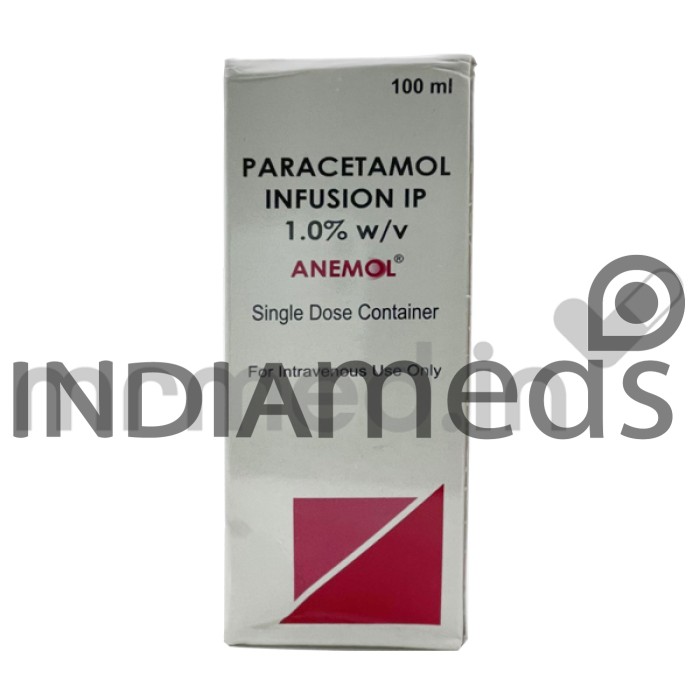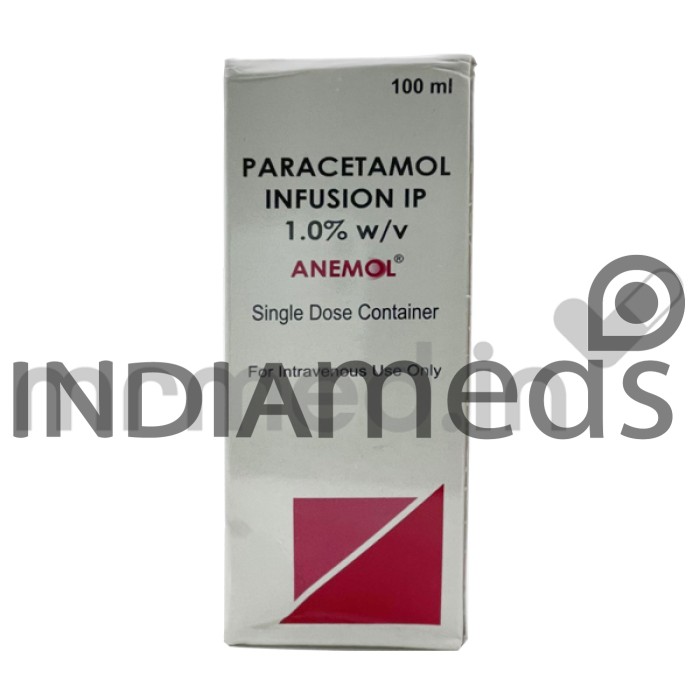
Anemol Infusion
Uses:
- Relief of mild to moderate pain;
- Reduction of fever;
- Management of moderate to severe pain in combination with opioid analgesics in adult and pediatric patients 2 years and older.
Therapeutic Effects:
- Reduces fever by inhibiting the formulation and release of prostaglandins in the CNS and endogenous pyrogens at the hypothalamic thermoregulator center;
- Analgesic activity by inhibiting cyclooxygenase enzymes, particularly COX-3, in the CNS.
Important Information:
- Do not take if allergic to Paracetamol or any other ingredients;
- Do not take if suffering from severe liver disease;
- Inform your physician if you have liver disease, kidney problems, or alcohol abuse;
- Can be used during pregnancy and breastfeeding, but inform your physician if pregnant or planning to get pregnant during treatment;
- Do not self-administer the medicine;
- Administered by a healthcare professional through infusion into veins.
Side Effects:
- Common: nausea, vomiting, headache, insomnia, itchy skin, constipation, agitation;
- Serious: liver injury, pneumonitis, skin reactions.
Safety Advices:
- Pregnancy: inform your physician if pregnant or planning for pregnancy during treatment;
- Breastfeeding: inform your physician if nursing a child;
- Lungs: can be used in patients with lung disorders;
- Liver: contraindicated in patients with severe liver disease;
- Alcohol: unsafe to consume alcohol during treatment;
- Driving: does not affect your ability to drive and operate heavy machinery.
Storage:
- Do not store above 30°C;
- Do not refrigerate or freeze;
- Protect the medicine from light and excessive moisture;
- Keep the medicine out of reach of children and pets.
FAQ:
Why would I need Anemol infusion instead of the oral form? Anemol infusion is typically used when immediate and precise pain relief is required or when oral administration is not possible, such as in case of nausea or vomiting.
How long does Anemol infusion take to start working? The onset of action for Anemol infusion is generally faster compared to the oral form. Depending on the individual and the specific condition being treated, you may start experiencing pain relief within 5 to 10 minutes after the injection.
Can I self-administer Anemol infusion at home? Healthcare professionals typically administer Anemol infusion in a clinical setting. Self-administration at home is generally not recommended unless specifically instructed and supervised by a healthcare provider.
Can Anemol infusion be used during pregnancy or breastfeeding? Anemol infusion are generally considered safe during pregnancy and breastfeeding when used as directed. However, it is recommended to consult with a healthcare provider before using any medication during these periods to assess appropriate dosage and potential risks.
Can Anemol infusion be used for migraine headaches? Anemol infusion can be used for migraine headaches, especially when oral medications are ineffective or tolerated due to severe nausea or vomiting. However, consulting with a healthcare provider for proper diagnosis and treatment options specific to your migraines is recommended.
Fact Box:
- Molecule name: Paracetamol;
- Therapeutic class: Antipyretic, Analgesics;
- Pharmacological class: Antipyretic, Analgesics;
- Indications: mild to moderate pain, to reduce fever, moderate to severe pain in combination with opioid analgesics.