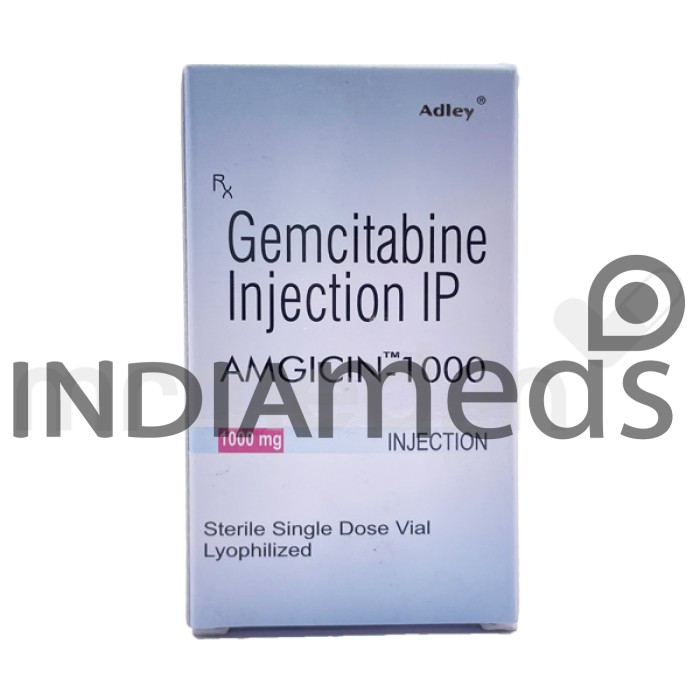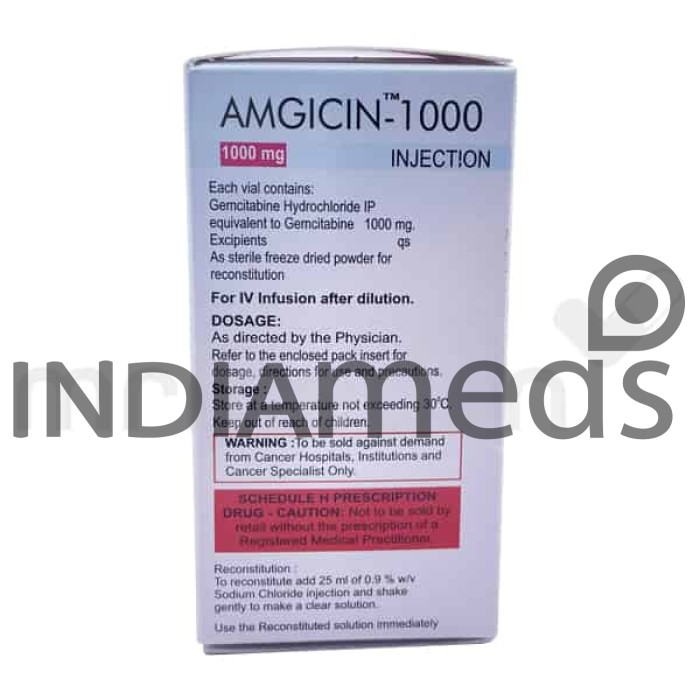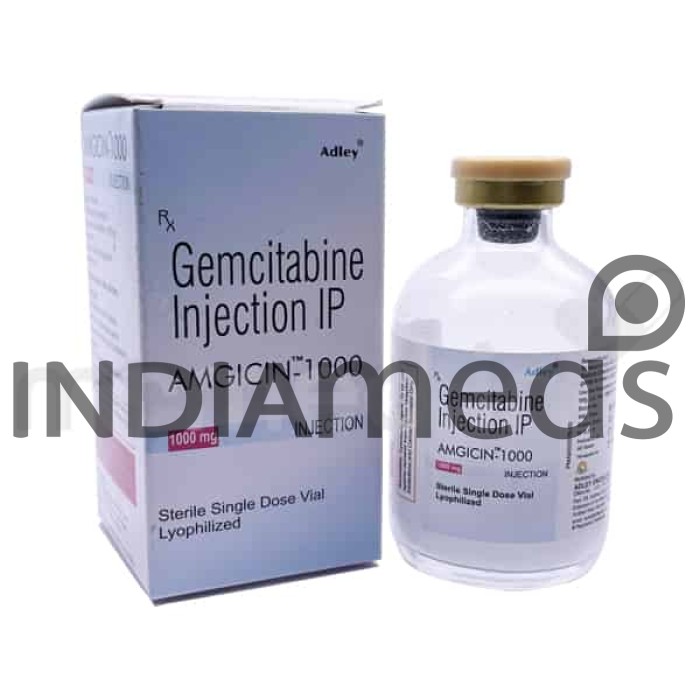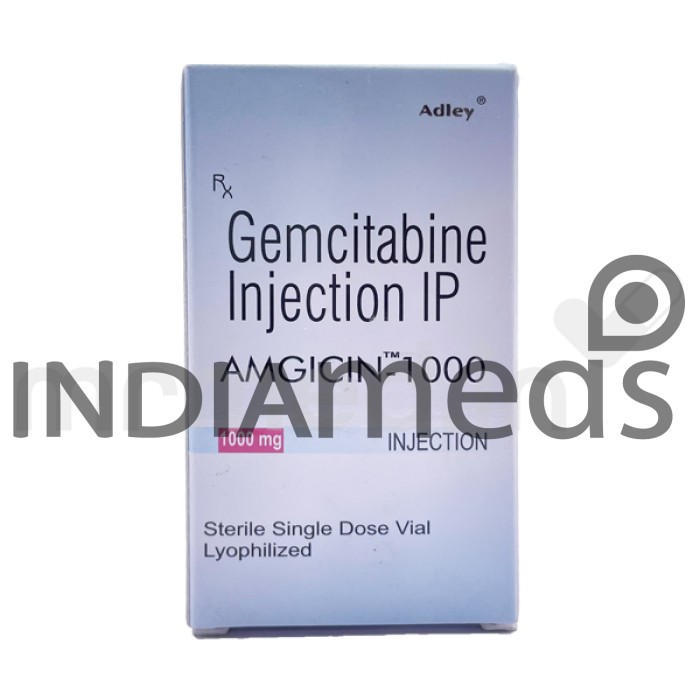
Amgicin 1000mg Injection
Uses:
- Bladder cancer (in combination with cisplatin).
- Ovarian cancer (in combination with carboplatin).
- Breast cancer (in combination with paclitaxel).
- Pancreatic cancer.
- Non-small cell lung cancer (NSCLC), alone or in combination with cisplatin.
Mechanism of action:
- Blocks the ability of cancer cells to process DNA replication, which is essential for the cells to divide and grow. This can prevent or stop the growth of cancer cells.
Important information:
- Not recommended for adolescents and children under the age of 18.
- Consult a doctor before use, especially if you have heart disease, liver disorders, kidney disorders, have recently had radiotherapy, or have been vaccinated.
- Regular monitoring of blood cell counts and kidney and liver function is required.
- Use effective birth control during treatment and at least six months after the last dose.
- May impair fertility in males.
Interaction with other drugs:
- Inform your healthcare professional about all the medicines you take, including prescription medications, over-the-counter medications, nutritional and vitamin supplements, and herbal products.
Storage:
- Does not require special storage conditions.
- Do not refrigerate or freeze.
Administration:
- Administered as an intravenous infusion into the vein.
- Dosage and administration frequency are chosen by the physician based on the medical condition.
Safety advice:
- Pregnancy: can cause harm to the unborn baby.
- Breastfeeding: do not breastfeed while taking the injection.
- Lungs: used cautiously in patients with lung disorders.
- Liver: inform your doctor if you have any liver disorders.
- Alcohol: not advised to take alcohol while under this treatment.
- Driving: could affect your ability to drive.
Side effects:
- Serious: pulmonary toxicity (shortness of breath, wheezing, cough), hemolytic-uremic syndrome (changes in the volume or colour of urine, increased bruising, or bleeding), pain or tenderness in the upper abdomen, allergic reactions, rashes, fever, swelling or sores in the mouth.
- Common: nausea, vomiting, low blood cell count, loss of appetite, hair loss, swelling of ankles, feet, and fingers, insomnia, constipation, diarrhea, headache, runny nose, chills, muscle pain, back pain, sweating, liver problems, blood in urine, abnormal urine test, oedema (swelling of ankles, fingers, feet, face).
FAQs:
How does Amgicin 1000mg affect cancer cells differ from healthy cells? Amgicin 1000mg affects cancer cells more than healthy cells because cancer cells have a higher rate of DNA synthesis and replication than healthy cells. Amgicin 1000mg interferes with this process, which is essential for cancer cell growth and division, ultimately leading to the death of cancer cells.
Can Amgicin 1000mg be used to treat cancer in children? No, Amgicin 1000mg injection is not recommended for adolescents and children under the age of 18.
What should I tell my doctor before starting Amgicin 1000mg treatment? Patients should inform their doctor of any pre-existing medical conditions, allergies, or medications they are taking before starting Amgicin 1000mg treatment. It is also important to inform the doctor if you are pregnant, planning to become pregnant, or breastfeeding.
Are there any dietary or lifestyle changes that patients should make while taking Amgicin 1000mg? Patients may need to make dietary or lifestyle changes while taking Amgicin 1000mg, such as avoiding certain foods or activities that may interfere with the medication's effectiveness or cause side effects. This should be discussed with a healthcare professional.
Does Amgicin 1000mg cure cancer? Amgicin 1000mg can help slow the growth and spread of cancer cells, but it may not cure cancer on its own. It is often used in combination with other treatments, such as surgery, radiation therapy, or other chemotherapy medications, to improve the chances of a cure or long-term remission.
How long does Amgicin 1000mg treatment last? The duration of Amgicin 1000mg treatment will depend on the type and stage of the cancer being treated, as well as the patient's overall health and response to the medication. Treatment may last several weeks or months.
Fact box:
- Molecule name: Gemcitabine.
- Therapeutic class: Anti-Cancer.
- Pharmacological class: Antimetabolites.